


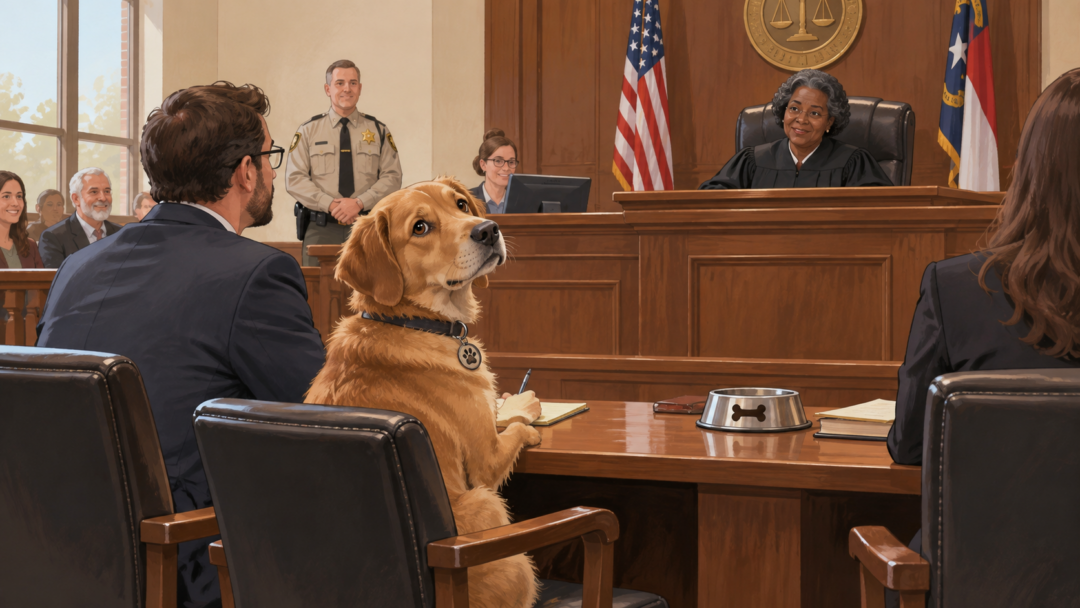
Dogs accused of bad behavior in Guilford County are about to get their day in court.
Like humans, the dogs will not have to testify against themselves – not because they have Fifth Amendment rights, but because they can’t speak.
Guilford County is creating a five-member staff appeal board to hear cases from owners who challenge a county determination that their dog – or, in some cases, another animal – is dangerous, potentially dangerous or vicious.
Guilford County Animal Services Director Jorge Ortega explained the new Dangerous or Vicious Animal Appeal Board to the Guilford County Board of Commissioners during an afternoon work session on Thursday, Sept. 17, in the Carolyn Coleman Conference Room at the Old Guilford County Court House.
Ortega said the subject is considerably less cheerful than many of the Animal Services reports that he normally brings to the commissioners.
“You know, usually it’s good news and some happy topics we talk about,” Ortega said. “This is about dangerous and vicious animals and how we are keeping our community safe.”
But he said the process is also intended to give animal owners an opportunity to explain why they believe the county got it wrong.
Under North Carolina law, a dog can be declared dangerous if, without provocation, it kills or severely injures a person, or if it has previously been determined to be potentially dangerous.
A dog can be considered potentially dangerous for seriously biting a person, severely injuring or killing another domestic animal while away from its owner’s property, or approaching a person off the owner’s property in a vicious or threatening manner that appears to be an attack.
And a dog doesn’t necessarily have to bite anyone to get itself into trouble.
Ortega told the commissioners that a dog that repeatedly runs loose and threatens people could potentially be declared dangerous even if nobody has actually been bitten.
He gave the example of someone walking down the street who has to jump onto the back of a truck to escape an attacking dog.
“That animal doesn’t necessarily need to bite,” Ortega said.
Guilford County’s ordinance goes beyond the state’s dangerous dog law because it applies to animals generally rather than just dogs.
Ortega said that means the process could even apply to somebody’s pet monkey if the animal meets the county’s definition of dangerous or vicious.
Animal Services gets plenty of chances to make those decisions.
Ortega told the board that the department investigated more than 1,200 bite cases in fiscal year 2025 and received 117 bite reports in August alone.
When a dog or cat is involved in a bite case, the animal is generally placed under a 10-day quarantine while Animal Services investigates what happened.
The circumstances matter a lot.
Ortega said a dog that bites somebody who jumped a fence onto its owner’s property may not be declared dangerous. But a dog that gets through an open gate, runs down the street and attacks someone walking by presents a very different case.
If Animal Services determines that an animal should be declared dangerous or vicious, the owner is notified and can challenge the decision.
That’s where the new appeal board comes in.
The board will be made up entirely of county staff rather than members of the public.
According to the rules presented to the commissioners, the five members will be an assistant county manager, who will serve as chairman; the public health director, who will serve as vice chairman; the social services director; the county security director; and a sworn law enforcement officer.
Assistant County Manager Jim Albright, who oversees Animal Services as part of his “Strong Community” responsibilities, is expected to chair the board.
Animal Services employees cannot serve on the appeal board – nor can members of the Guilford County Animal Advisory Committee.
The board will hear testimony, review evidence and determine whether the county’s dangerous or vicious animal determination should stand.
The process is more formal than simply sitting around a conference table and talking about whether Fido has been a bad dog or not.
The rules call for minutes of the hearings, testimony and exhibits to be preserved, a quorum to be present and decisions to be made by vote. The board can hear testimony from the owner and witnesses and issue a final determination.
North Carolina law already requires local governments to provide an appeal process for potentially dangerous dog determinations and requires a separate board to hear those appeals. North Carolina law gives an owner three days to file written objections in a potentially dangerous dog case, requires a hearing to be scheduled within 10 days and allows the board’s final decision to be appealed to Superior Court.
Guilford County’s ordinance also provides an appeal process for animals declared dangerous or vicious. If the county’s determination is upheld, that doesn’t automatically mean the animal will be euthanized.
Depending on the circumstances, an owner may be allowed to keep the animal under strict conditions. That can include secure enclosures, warning signs and other safety requirements.
In more serious cases, however, county officials can determine that an animal poses too great a public safety threat to be returned to the owner.
Ortega said humane euthanasia can be one of the outcomes.
Commissioner Pat Tillman asked whether a dangerous animal might instead be sent to one of the rescue organizations that specialize in difficult or aggressive dogs.
Ortega said such facilities exist but he questioned whether moving the animal would change the underlying behavior or eliminate the danger.
Tillman said he wanted Animal Services to look further into that possibility.
Chairman of the Board of Commissioners Skip Alston questioned how the county would handle cases based on threatening behavior rather than an actual attack.
Alston asked what would happen if someone simply called the county and claimed that a dog chased them when there was no bite and little other evidence.
County Manager Victor Isler said those are exactly the types of cases where county staff will have to sort through competing accounts and determine what actually happened.
Isler said the process is intended to give commissioners some assurance that there will be due diligence and fact-finding before any serious decisions are made.
“There’s a lot of hearsay that we have to sift through with staff to make these hard decisions,” Isler said.
And if an owner still thinks the county’s new dog court got it wrong, there is one more place to go.
A final appeal can be taken to Guilford County Superior Court, where the case can land in an actual courtroom.




while is everybody smiling, that dog is obviously guilty !
How much will it cost the taxpayers, Skip and his don’t care about taxpayers.