


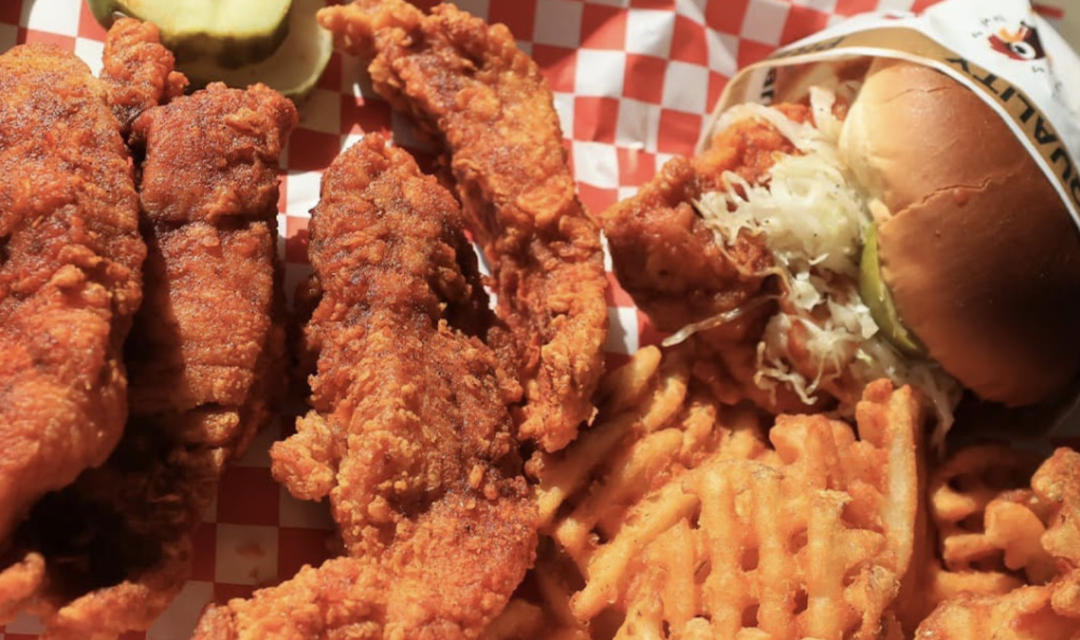
Very, very hot chicken has arrived in the Triad – but the restaurant chain will only serve it if you sign a legal disclaimer acknowledging that you’re eating it at your own risk.
A quickly growing chain called Hangry Joe’s Hot Chicken has been expanding into the Greensboro area recently – bringing with it Nashville-style hot chicken, a loyal following, and a requirement that sounds more like something you’d expect before skydiving than ordering lunch: a liability waiver.
If you want the hottest items on the menu – known as those at the “Angry Hot” level – you have to sign a waiver first.
The concept might sound like a gimmick, but it’s very real. The waiver warns customers that the food is extremely spicy and could cause physical discomfort. Among the lines customers agree to are acknowledgments that they’re voluntarily taking on the risk, that the restaurant isn’t responsible for any adverse health effects, and that they won’t demand refunds simply because the heat is overwhelming and they can’t eat the chicken.
In plain English: you asked for it; you signed on the dotted line; so you can’t complain afterward.
According to the company’s promotional materials, customers who take on the challenge are encouraged to document their experience, and they can even earn a spot on a “Wall of Fame” if they survive the ordeal.
Hangry Joe’s was founded in 2021 in Northern Virginia by Derek Cha and Mike Kim, and the chain has expanded quickly, riding the wave of popularity for Nashville hot chicken. The Triad now has multiple locations, and like many fast-growing chains, it leans heavily into branding – in this case, the idea that its hottest offering is something to be feared as much as it is enjoyed.
However, the waiver raises an obvious question: just how dangerous can chicken really be?
That’s where things get interesting.
Some say it can be very dangerous.
On online forums like Reddit, the debate over this waiver-required food is lively and, at times, brutally honest. Some users believe the waiver is mostly about marketing.
“Sometimes it’s just a marketing thing to get people in the restaurant,” one commenter wrote, noting that the idea of signing a waiver creates anticipation and hype.
Others say there’s a more practical reason: covering the restaurant legally and avoiding complaints. As one self-identified chef put it, buried in these waivers is often a clause making it clear you won’t get your money back just because the food is too hot – because, as he put it, “you asked for this.”
Other responses are more disconcerting.
Some users describe genuinely intense physical reactions. One recalled trying ultra-hot wings and experiencing severe stomach pain, sweating, and cramps that lasted for hours. Another said the heat was so extreme that no amount of milk or ranch dressing provided relief.
There are even stories – whether exaggerated or not – of people nearly heading to the emergency room.
Others on social media warn: wash your hands thoroughly, don’t touch your eyes, and think twice before underestimating what capsaicin – the chemical that makes peppers hot – can do.
Medical experts generally agree that, while extremely spicy food is unlikely to cause permanent harm to a healthy person, it can trigger intense short-term reactions. These include burning sensations, stomach irritation, nausea and, in some cases, digestive distress that lingers long after the meal is over.
In that context, the waiver makes sense.
From a legal standpoint, it’s a form of protection.
From a business standpoint, it’s a marketing tool.
And from a customer standpoint, it’s a dare.
Of course, not everyone is lining up to sign on the dotted line.
For many people, the lower heat levels on the menu are more than enough, offering the flavor of hot chicken without the risk of regret or a trip to the hospital.
However, for a certain type of customer – the kind who sees a warning and takes it as a challenge – that waiver is part of the appeal.




I did it, and I am still alive!
The way it is cooked, I wouldn’t eat any restaurant fried chicken.
A cheeseburger joint in LV sells Mountains-it-called-Cheeseburgers. You have to sign a waiver if you get and gastro-intestinal discomfort, side affects, and/or heart disease. Sorta like it’s free if you can eat it all in 30″ joints.
Supersize me on everything. I understand it beats sex. But then again, how would I know?
I always choke my chicken first, that way it won’t hurt me.
ive had hotter chickens… my buddy bill back in ’89 cooked a bbq chicken and then dunked it in 10 separate barrels of siracha, wasabi, ghost pepper, etc. havent heard from him since
I’d love a hot chikin.
I ye olde merrie UK, a chick is a “bird”.
austin morris can you confirm this?
It’s just as bad going out as going in. Does the waiver cover that??!!
.
It’s just a game of chicken…
brown food is usually unhealthy but i love it too.