


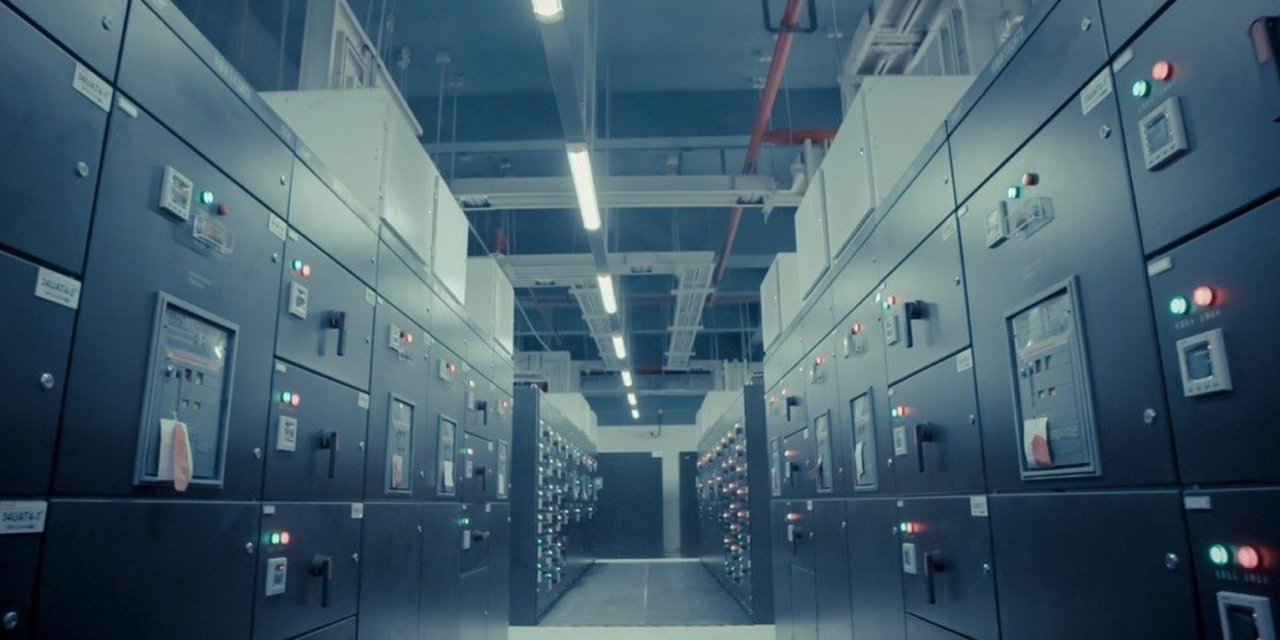
The Greensboro City Council has reversed course on whether the city should temporarily put the brakes on large new data centers.
At its Monday, Aug. 3 meeting, the council voted unanimously to begin the legal process that could lead to a 120-day moratorium on new data centers requiring more than 10 megawatts of electrical power.
The 9-0 vote came less than two weeks after the council voted 5-4 against moving forward with a moratorium.
The action taken Monday didn’t actually impose the moratorium. Instead, it directed city staff to publish the required notice, prepare a proposed ordinance and schedule a legislative public hearing for Monday, Aug. 17 at 4 p.m. in the Katie Dorsett Council Chamber at the Melvin Municipal Office Building at 300 W. Washington St.
Following that hearing, the council will decide whether to adopt the temporary moratorium.
If approved, the moratorium would temporarily stop the city from accepting, processing or approving development applications for data centers, data storage and processing facilities and similar operations with an electrical demand exceeding 10 megawatts.
Councilmember Tammy Thurm made the amended motion directing City Manager Trey Davis and City Attorney Lora Cubbage to begin the process under state law.
The proposed ordinance is expected to identify the problems the moratorium is intended to address, the specific city approvals that would be suspended, the proposed termination date and the work the city intends to complete during the 120-day pause.
The city plans to use the time to examine the possible effects of large data centers on Greensboro’s electrical grid, water system, other public infrastructure, environment and land-use policies. The council will also hear from experts representing differing views and study how other communities are regulating the facilities.
The information could ultimately lead to amendments to Greensboro’s Land Development Ordinance.
Greensboro Mayor Marikay Abuzuaiter said after the vote at the meeting, “We are listening.”
In a city news release issued Wednesday, Aug. 5, Abuzuaiter said the council had received questions from residents that deserve answers.
“A 120-day moratorium allows us to gather facts, hear from the public and make informed decisions,” she said. “As a council, we owe it to our residents to ensure growth is thoughtful, strategic and in Greensboro’s long-term best interest.”
Councilmember Crystal Black said at the meeting that the question facing Greensboro wasn’t a simple choice between supporting or opposing economic development.
“It involves big questions about our local environment, our economy and the future of our neighborhoods,” Black said.
She said council members had strongly held differing opinions following the original vote but continued talking and eventually found “a unified path forward.”
“We didn’t get to this consensus by ignoring our disagreements,” Black said. “We got here by working right through them.”
Black said the temporary pause would allow the city to examine environmental information, local resources and zoning regulations while attempting to maintain the city’s economic momentum.
“We were able to get to this point by focusing on policy rather than politics,” she said. “We built a balanced solution.”
Black encouraged residents to attend the Aug. 17 hearing and tell council members what they expect from the city’s data center policies.
Councilmember Cecile Crawford, who had previously called for a six-month moratorium, thanked residents who contacted the council.
“Don’t think that your voice is never heard,” Crawford said. “We listen.”
Mayor Pro Tem Denise Turner Roth, who had raised concerns about imposing a moratorium during the council’s earlier debate, also thanked residents for remaining engaged.
“The truth of the matter is that the energy demands and the demands on our resources – be it water and noise impacts – those things do matter,” Roth told those at the City Council meeting..
She said council members continued talking with each other between public meetings in an attempt to develop a process that would allow the city to protect residents without shutting itself off from the economic opportunities connected to artificial intelligence and other emerging technology.
Roth has repeatedly warned against framing the debate as a choice between protecting neighborhoods and participating in the future economy.
Councilmember Hugh Holston called the new position a collaborative effort involving residents, council members and city staff.
“There’s a lot of information out there, and it’s incumbent upon us as council members, as the stewards of this city, to make sure that we take care of the city,” Holston said.
He said that responsibility includes considering residents, businesses and the environment while keeping Greensboro open for business.
“This is not the ending, but it’s the beginning of the next steps that we’ll be taking,” Holston said.
The controversy in Greensboro is part of a much larger national debate that has increasingly filled local government meeting rooms with residents concerned about electricity use, water consumption, noise, backup generators, transmission lines and the effect of large industrial buildings on nearby homes.
Charlotte approved a 150-day data center moratorium in June, and cities and counties in North Carolina and across the country have adopted or considered similar pauses while rewriting their zoning regulations. Local governments in Kentucky, Iowa, Maryland and other states have faced crowded meetings and strong public opposition to proposed facilities.
The rapid growth is being fueled largely by artificial intelligence, which requires enormous amounts of computing power to train and operate increasingly sophisticated models.
The International Energy Agency projects that worldwide data center electricity consumption will roughly double between 2025 and 2030. Electricity use by AI-focused data centers is expected to grow even faster, and data centers are projected to account for nearly half of the increase in US electricity demand through 2030.
The US Department of Energy reported that data centers consumed about 4.4 percent of the nation’s electricity in 2023 and could account for between 6.7 percent and 12 percent by 2028.
Water use varies greatly depending on the size and design of a facility and the cooling system it uses. Some data centers use evaporative cooling that can consume substantial amounts of water, while newer closed-loop systems recirculate water and can greatly reduce consumption.
That means that the effect on a city’s water supply can’t be determined simply by labeling a project a data center – the details of the proposed operation matter a great deal.
For Guilford County, the idea of creating a massive data center complex is actually a blast from the past.
In late 2013, Guilford County officials unveiled Project Haystack, a proposal to transform the former Guilford County Prison Farm and surrounding property along the Guilford-Alamance county line into a 2,000-acre data center and advanced manufacturing park.
The plan called for using the roughly 800-acre Prison Farm as the centerpiece of the development while acquiring about 1,200 additional acres. A wildly optimistic feasibility study predicted that Project Haystack could attract as much as $6.5 billion in private investment, create more than 5,000 jobs and generate millions of dollars a year in tax revenue.
The proposal would have required Guilford County to contribute hundreds of acres of public land, purchase additional property and work with Greensboro, Burlington, Alamance County, Gibsonville and the state on water, sewer, road and other infrastructure improvements.
Residents of the largely rural area came out strongly against the plan. Opponents argued that the county should preserve the Prison Farm as agricultural and public land rather than turn it over for industrial development. A citizens group called Public Lands for Agricultural and Community Enrichment organized against Project Haystack, and residents from Guilford and Alamance counties repeatedly spoke against it.
That project never attracted the enormous private investment its backers predicted. Questions remained about the cost of extending water and sewer service, acquiring land and preparing the site for development.
By 2017, Project Haystack was effectively dead. The Guilford County Board of Commissioners formally closed the remaining project fund and returned about $3,600 to the county’s construction fund. In the end, Greensboro and Guilford County had spent about $80,000 on consultants and legal work, but the giant data center park never got beyond the planning stage.
Now, thirteen years later, rapidly expanding artificial intelligence technology has made data centers a major economic development prize again – but it has also revived many of the same questions about public resources, infrastructure costs, land use and how much risk local governments should accept in the pursuit of promised investment.
Greensboro residents will get their next big opportunity to weigh in when the council holds the public hearing on Monday, Aug. 17.




them dang ais and robots
Who needs data centers? Who benefits from data centers? How does the local population benefit from data centers? Amazon Web Services, Microsoft Azure, Google Cloud, Meta (Facebook) and Oracle need data centers. Who benefits from data centers? Amazon Web Services, Microsoft Azure, Google Cloud, Meta (Facebook) and Oracle; while the population gets higher power bills; a threat to our water usage and availability; noise; harm to animals; and artificial lights in our dark sacred nights (nod to Louis Armstrong.)
The companies behind building data centers: Digital Realty which is a real estate investment trust and Equinix Data Center Company.
Every company involved with data centers is involved to make money. There is no altruism in data centers. Personally, I don’t need more Amazon packages and if Facebook went away tomorrow, would anyone really care? As far as information stored in the Cloud, this will be a huge regret in the future.
We are asked to sell our land and endure the consequences of data centers. Land that cannot be replaced while we will be stuck with the ugly buildings when engineers find a way to place data centers in space, which is in the works as this is being written. Humanity does not need more speed in our lives. Say NO to data centers. Politicians and landowners will be praised in the future for saying NO.
Commercials for data centers are popping up. This is a sign that the population needs to be convinced that data centers are not harmful. Don’t be convinced. If data centers were a good thing, they would have no need to advertise.
Well said.
This is a strong case for the value of government regulation versus just letting private companies do what ever they wish with our limited resources and tax dollars.
I hope they do their homework on this. The long range study and proof is that Data Centers do not cause what the Democrats say they do, but just the opposite. They add value and provide much needed resources!
they are super encyclopedias with info in ‘real time’. wikipedia on steroids. but the electricity usage should be visible to the user immediately: AI cost to determine the # of pimples on a pink pigs butt $6.5k ! ! oops
Value for who? And what resources do they provide?
Last I checked, the drain water resources, they drive up power demand (and therefore price). Sure it will create a few construction jobs and a handful of local long-term jobs but for what gain to the community over the costs?
120 days? There is your answer from this city council.
Information and map about data centers in US and in each state, including NC.
https://www.cleanview.co/data-centers/us
Flock spy cameras rely on data centers to collect and store information on EVERY license plate that is read by Flock cameras. Want data centers? If so, you are helping to turn America into a surveillance state.
https://www.foxnews.com/media/flock-safety-cameras-need-constitutional-guardrails-before-further-deployment-tennessee-mayor-argues
Greensboro is not a proper place for data centers given a water supply already committed to the megasite, a precarious stormwater system where new development results in neighborhood flooding, while Buffalo Creek is already way oversubscribed, a property tax rate highest in the state. These facilities belong in the Permian Basin, where companies like EagleRock, LandBridge and Texas Pacific Land are leasing land for this purpose, and working with oil companies to develop and locally fuel new power generation facilities to feed them. Water that results from drilling will be cleaned up and used for cooling. There is no equivalent gold mine in Greensboro. Data centers are the wrong type of development for this mid-sized city that is already beginning to suffer extreme cost of living inflation.
I think they should just build all the data centers in Canada. Nice and cold should help with cooling those server racks. Plenty of water, and places where there aren’t a lot of folks to bother. If they put them all in one area, the companies could build their own power plant to provide the electricity. Cheap oil from British Columbia would negate need for pipelines to US ports. Then they would have rebuttal power to Trump’s threats of being forced to become 51st state. Besides, we don’t want people from Latin America invading us, why would we want Canadians?
One more interesting story about Flock cameras, cameras that rely heavily on data centers.
https://stateoftheday.us/p/how-flock-cameras-almost-had-two?utm_campaign=email-half-post&r=10hyqk&utm_source=substack&utm_medium=email