
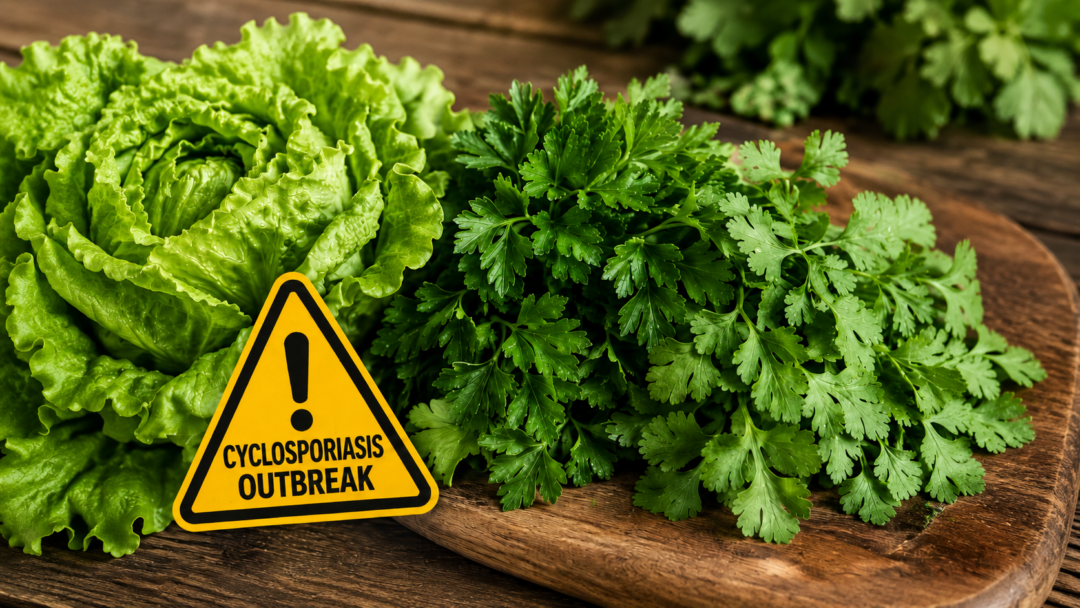
North Carolina health officials still haven’t identified the source of a major outbreak of cyclosporiasis, but parsley and cilantro are increasingly showing up in interviews with people who became sick.
The North Carolina Department of Health and Human Services announced on Tuesday, July 28, that the state has identified 718 cases of cyclosporiasis and 24 hospitalizations since May 1.
As people have come to know lately, Cyclosporiasis is an intestinal illness caused by the microscopic Cyclospora parasite. People generally become infected by eating contaminated food or drinking contaminated water.
NCDHHS said information gathered through interviews with patients indicates that parsley and cilantro were commonly eaten by people who later became sick.
However, many of those people with cyclosporiasis reported that they hadn’t eaten either parsley or cilantro before becoming ill.
Health officials said that suggests there could be multiple sources of exposure.
The state hasn’t identified a particular farm, distributor, restaurant, grocery store, food product or type of produce responsible for the outbreak.
NCDHHS is continuing to work with local health departments and state and federal agencies to gather information and attempt to identify the source or sources of the illnesses.
No contaminated ingredient or food product has been confirmed as the cause of the increase in North Carolina cases and no related recall has been announced.
If a contaminated ingredient or food product is identified and recalled, local health departments will work with restaurants, grocery stores and other establishments to make sure that the product is no longer being sold or used.
NCDHHS has also launched a new Cyclosporiasis Cases and Outbreaks Dashboard to provide updated information about the outbreak.
The dashboard is scheduled to be updated every Tuesday with the latest number of cases and hospitalizations.
Health officials warn that simply rinsing or washing fresh fruits, vegetables and herbs may not be enough to remove the parasite. Washing produce night remove some of the Cyclospora parasite but doesn’t guarantee that all of it will be removed.
On the other hand, cooking food to an internal temperature of 165 degrees will kill the parasite.
NCDHHS recommends that people who are concerned about parsley and cilantro consider avoiding them, using locally grown produce or cooking the ingredients thoroughly before eating them.
Most people who become infected begin feeling sick about one week after being exposed to the parasite, although some people may not experience symptoms.
The primary symptom is prolonged watery diarrhea. Other possible symptoms include loss of appetite, weight loss, stomach cramps, bloating, increased gas, nausea and fatigue.
Some patients may also experience vomiting, body aches, headaches or a low-grade fever.
NCDHHS recommends contacting a health care provider if a person experiences severe or persistent diarrhea or believes that he or she may have cyclosporiasis.
The illness can be treated with antibiotics. Health officials also recommend drinking plenty of water or beverages containing electrolytes to prevent