
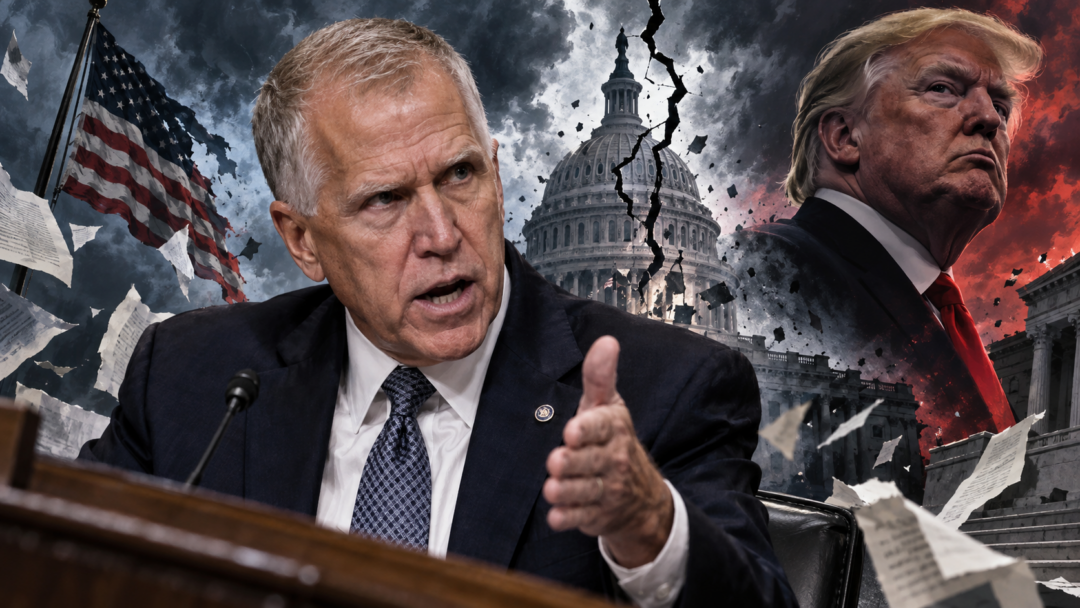
Wow, the gloves are off and the knives are out.
US Sen. Thom Tillis has spent years walking a political tightrope when it comes to President Donald Trump. But this week, Tillis appears to have decided he doesn’t need to walk the tightrope anymore.
The retiring North Carolina Republican has released a new book, “How to Lose Friends and Antagonize Presidents: The Trouble with Sycophants, Courage Outsourcing, and Partisan Groupthink” – and he’s now been making the television rounds promoting it.
And while Tillis still occasionally grabs the railing by saying he respects Trump, considers him an extraordinary political talent and agrees with him on plenty of issues, the attacks in the book and in a series of television interviews over the last few days are unlike anything Tillis was saying publicly when he was still planning to seek reelection.
Tillis was back on CNN Tuesday night, Oct. 6 making more disparaging remarks about the president and members of his administration – although, even then, he was still performing something of the balancing act he’s perfected over the years.
But the balance is getting harder to see.
Among other things, Tillis is warning that unchecked presidential power could eventually leave the country with what he called a “dictator king.”
Tillis has called his vote to confirm Secretary of Defense Pete Hegseth the “biggest regret of my career,” said he should have stopped Robert F. Kennedy Jr. from becoming secretary of Health and Human Services, ripped former Homeland Security Secretary Kristi Noem and taken shots at several other people Trump placed in senior positions.
And then there are the colorful text messages.
In one message to Trump that Tillis includes in the book, Tillis said that if Trump had ever directly threatened him with a primary challenge, “I would have immediately told you to f— yourself.” Except Tillis didn’t use dashes.
Tillis went on to tell Trump to save his threats and “head games for cowards and fools.”
This is all considerably far removed from the carefully calibrated disagreements Tillis used to have with Trump, all while assuring reporters that he supported the president most of the time.
Another Tillis message to Trump was just about as blunt: After Trump publicly attacked him earlier this year, Tillis told the president that he didn’t take that kind of treatment from anyone, including Trump, and wrote, “I care if you fail and right now we are failing.”
Tillis may be retiring, but apparently he got rid of his self-censorship button first.
The book was released Tuesday, Oct. 6, and its subtitle gives readers a pretty good idea of where Tillis is going with it. It’s one book that you can sort of judge by its cover.
The publisher describes Tillis as taking aim at the “sycophants” surrounding Trump, Republican yes-men and women and what it calls the “weirdos of the MAGA world.” Tillis even coins his own term – “MAGATS” – for members of Trump’s inner circle whom he believes are hurting both Trump and the Republican Party.
However, Tillis has been careful not to put all of the blame on Trump himself.
According to The Washington Post, Tillis’ principal complaint isn’t Trump but “the idiots he’s got working for him,” while also calling Trump an “amazing political talent.”
That distinction has been showing up repeatedly during Tillis’ book tour.
During an interview Monday with CNN’s Jake Tapper, Tillis actually praised Trump’s current campaign strategy – saying Trump was doing everything he could to turn out MAGA voters who often don’t vote in midterm elections.
Then the conversation turned to the Trump administration.
Asked which people around Trump had given him the worst advice, Tillis put Noem at the top of the list and said she was simply not qualified for the job she held.
Hegseth wasn’t far behind. Tillis told Tapper he was surprised Hegseth still had a job and said the defense secretary lacked the executive experience necessary to manage the Department of Defense.
That criticism is particularly striking because Tillis supplied one of the key votes that put Hegseth there in the first place.
Hegseth’s nomination ended in a 50-50 Senate tie, requiring Vice President JD Vance to cast the deciding vote.
Tillis now says supporting Hegseth was the biggest regret of his career.
He also says he regrets supporting Kennedy.
Tillis writes in the book that he has to live with the vote and what he describes as the havoc Kennedy’s tenure has caused. But he also argues that other Republican senators shouldn’t have expected him to be the one member who killed controversial Trump nominees while they quietly went along.
“I had no intention of letting my colleagues outsource their courage to me,” Tillis writes.
That theme – Republican lawmakers privately complaining about Trump but being unwilling to challenge him publicly – runs throughout the book.
Tillis’ criticism goes well beyond personnel decisions. He attacks Trump’s tariffs, criticizes aggressive immigration enforcement tactics and argues that some raids appeared designed to intentionally create disorder.
Tillis has also become increasingly critical of the handling of the Iran war.
The most serious criticism, however, may involve presidential power itself.
In a “60 Minutes” interview that aired Sunday night, Tillis said Congress has repeatedly surrendered too much power to presidents of both parties; but he added that Trump’s use of political threats and primary challenges against members of Congress raises the stakes.
Tillis said that if the executive branch can intimidate lawmakers into surrendering their independence, the United States could become a “one-institution country.”
That, Tillis said, would leave the nation with “a sort of dictator king if we’re not careful.”
Those aren’t the words of a senator who’s merely quibbling with the White House over a piece of legislation.
Tillis’ final split with Trump came in June 2025 over Trump’s massive tax and spending bill, which Tillis vehemently opposed because of its Medicaid provisions.
Trump responded by attacking Tillis and threatening to support a primary opponent.
Tillis announced shortly afterward that he wouldn’t seek another term.
Tillis writes that when he reached that point, his reaction was simply… “I’m done.”