

A bill that could blow up Guilford County’s budget process at the last minute could also create a major headache for the City of Greensboro.
Senate Bill 889, titled “Property Tax Reappraisal Moratorium,” has now passed the North Carolina General Assembly and is on its way to Gov. Josh Stein.
The bill would prevent counties with reappraisals effective Jan. 1, 2026, from using those new property values for the 2026-2027 fiscal year.
For Guilford County, that means the new 2026 property values would be put on hold for one year and local governments in the county would have to use the older 2022 values for the coming budget year as well.
The Rhino Times reported earlier this week that the bill could force Guilford County commissioners back to the drawing board just days before they were expected to adopt a new budget.
However, the county government isn’t the only area local government affected.
Cities, towns and fire districts use the county’s tax values as well.
That means the bill doesn’t just affect Guilford County government. It also affects Greensboro, High Point, Jamestown, Pleasant Garden, Summerfield, Oak Ridge, Stokesdale, Sedalia, Whitsett, Gibsonville and the fire districts that rely on property tax values to set their own tax rates.
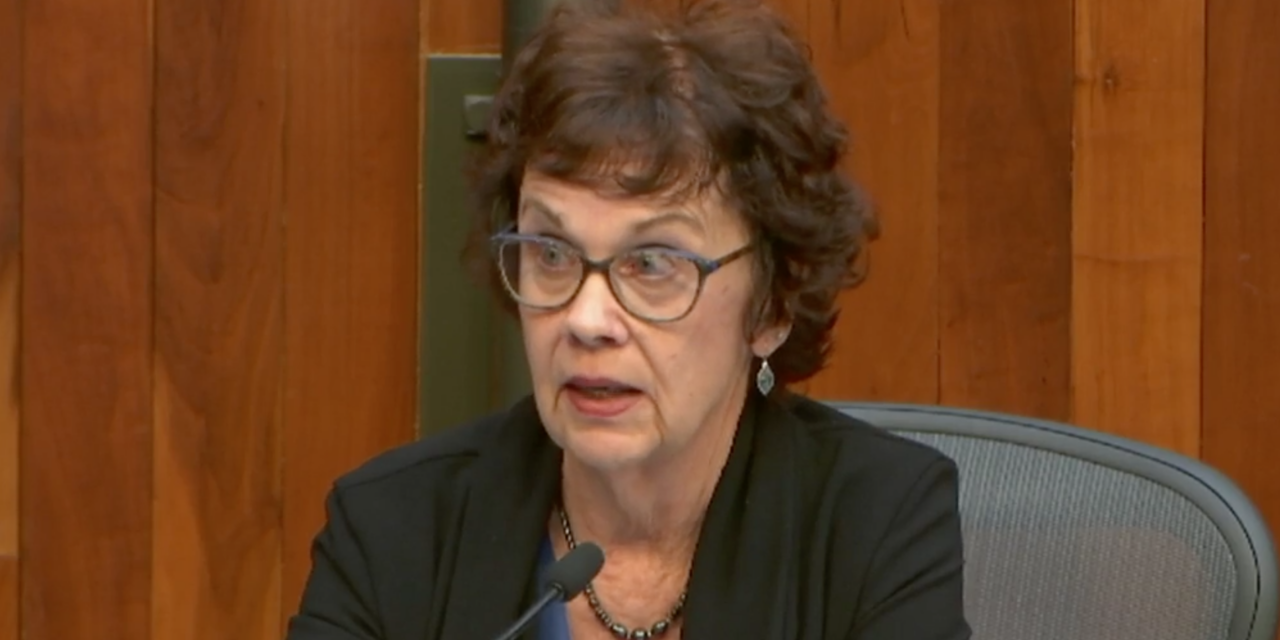
Greensboro Mayor Marikay Abuzuaiter told the Rhino Times on Wednesday June 10 that the bill had moved much faster than she expected.
“We knew that that bill was in there,” Abuzuaiter said. “But I didn’t honestly know it was going to move that fast.”
Abuzuaiter, who assumed office as Greensboro’s mayor on Dec. 2, 2025, said the city had been working on its budget with the expectation that it would be able to use the new property values.
If SB 889 becomes law, she said, Greensboro officials will have to look again at the numbers and decide what the city can afford to do.
“We’re going to have to look at whether we’re going to have to raise the property tax rate,” Abuzuaiter said.
The city’s current property tax rate is 67.5 cents per $100 of assessed property value.
Like Guilford County, Greensboro had been looking at lowering the tax rate after the revaluation because property values went up.
However, lowering the rate doesn’t necessarily mean lowering the tax bill for residents.
The problem for local governments is that, if the new values can’t be used, they have to choose between raising the tax rate on the old values or cutting spending.
Abuzuaiter said Greensboro had been trying to lower the tax rate under the new values – though she said she never promised the city could get all the way to revenue neutral.
“We were going to do our best to lower the tax rate on the new valuations,” she said. “I would love to be the mayor who says we are going revenue neutral. I would love to be – but I don’t think that brings into account all of the expenses we have.”
The mayor said the city is facing higher costs in a wide number of areas, including employee health care, public safety, fuel, asphalt, diesel, buses and chemicals used for the city’s water system.
“Our health care has gone up quite a bit for the city,” Abuzuaiter said.
She added that some of the city’s water chemicals have gone up by 30, 35 or even 45 percent.
“Everything has gone up,” she said. “Just like your home, everything has gone up. The same has happened for the city.”
Abuzuaiter told the Rhino Times that, if the city is forced to use the old values, the City Council will have to decide whether Greensboro can continue providing essential services under the current rate or whether that rate has to go up.
“We’re kind of in a crunch,” she said.
The mayor said she understands that a lot of people want local governments to tighten their belts, but she added that Greensboro has already cut back in some areas and was under a hiring freeze for nearly a year.
She said the city still needs employees in areas such as inspections and code compliance – especially as Greensboro continues to grow.
“We’re not wasting any money,” Abuzuaiter said. “I hear people say all the time, ‘Well, tighten your belt, tighten your belt.’ But we need new inspectors. We need more code compliance people. If you’re growing, you’re going to need these things.”
The new mayor added that the city is still catching up from earlier economic downturns and hiring freezes.
“We need to grow staff so that we can make everything aesthetically pleasing but also safe for our residents,” Abuzuaiter said.
One major issue for the city is public safety.
Abuzuaiter said Greensboro is lucky that the City Council approved raises for police officers two years ago.
“If we hadn’t done that, we’d still be 130 short on officers,” she said.
She also said that kind of expense has to be sustained.
The bill is a response from Raleigh to complaints that property owners in some counties were facing sharply higher tax bills after revaluations. Guilford County’s 2026 revaluation produced large increases in property values.
Guilford County Manager Victor Isler had recommended lowering the county tax rate from the current 73.05 cents per $100 of assessed value to 61.9 cents. But even with that lower rate, the county would collect much more property tax revenue because of the new higher values and property owners would see much higher bills.
The same basic math applies to Greensboro.
The city could lower its tax rate under the new values and still bring in additional money. But if the new values are blocked for a year, the city can’t get that same money unless it raises the rate on the older values.
That’s exactly the type of highly visible tax rate increase local elected officials generally hate to vote for.
Abuzuaiter said the city also has to keep an eye on possible federal and state cuts.
She said Greensboro hasn’t been hit hard yet, but she’s concerned about the future because transportation, infrastructure and some police and fire programs rely on state and federal funds.
“It hasn’t been huge yet,” she said of those cuts. “We’re still kind of walking on eggshells hoping it’s not.”
Abuzuaiter said transportation is a good example of how much the city relies on outside money.
“For transportation, we rely on the federal government and the state to make up 80 percent, then we pay 20 percent,” she said. “It’s the only way we could get things done.”
The mayor said some transportation and infrastructure projects could be delayed or stopped if those funds go away.
According to Abuzuaiter Greensboro is also trying to keep up with housing needs as the city prepares for expected growth from major economic development projects.
She said she’s proud of the city’s effort to reach 10,000 new residential units by 2030.
Abuzuaiter said she checked the city’s housing dashboard and Greensboro had already reached 3,202 units.
“That means apartment units or housing units,” she said. “Residential units and duplexes – all of those things apply.”
She said that puts Greensboro ahead of where she expected the city to be.
“I was anticipating we wouldn’t reach 5,000 until 2028,” Abuzuaiter said. “We’re already almost ahead of the game. We are ahead of the game.”
Still, all of that growth creates costs for city government.
More housing, more development and more people mean more inspections, more code enforcement, more roads, more police, more fire protection and more city services.
That’s why the revaluation moratorium matters so much to city officials.
For taxpayers, the bill could delay higher tax bills caused by the new values.
For local governments, it could force a very public decision: raise the tax rate or cut spending.
Abuzuaiter said Greensboro will have to go back and see what the city can do if it has to build the budget on the old values.
She said the city had been expecting to work with the new values and a lower tax rate.
Now, like the county, Greensboro may be looking at a much different budget process than the one city officials thought they were in.
“I hate to call it the old budget,” Abuzuaiter said. “But you know what I mean.”
The governor can veto the bill, but the votes in the General Assembly indicate that supporters likely have enough votes to override a veto.
That means Guilford County, Greensboro, the county’s other towns and the fire districts may all have to prepare for a one-year budget reset they didn’t ask for and weren’t expecting.




consider the meaning of ‘judgement proof’ & ‘cash cow’ before creating or acquiring ‘property’ ?
Subjects of Greensboro,
“We’re going to have to look at whether we’re going to have to raise the property tax rate,” Abuzuaiter said.
And so it begins. Bet the Omnipotent One is paying close attention.
December 16th, 1773
Budget increases from around $600 million in 2020 to over $850 million in 2026 and they are cutting all they can? Give me a real!! Tighten up buttercup!! Citizens are getting squeezed with these high property taxes. Time for this Democrat party leadership big government to get squeezed!! Go to the polls in October/November to vote for lower tax bills and Republican candidates who believe in smaller government!! Squeeze the D’s!!
———————-
Of course.
austin, would u b willing to pay a higher property tax rate applied JUST to NW guilford co. in exchange for the kind of rec center that east g’boro has under construction ? built near y’all ?
Duh mayor….how about thinking of what you can cut….reduce and eliminate from the budget, instead of continued wasteful programs , city pet projects and homeless dog houses. Cutting out leaf pick up doesn’t float the boat.
Hey-ya Hey-ya Hey-ya
Get your feathers, get your tar, get your rails right here.
Hurry, Hurry, Hurry. Get it while it lasts
Hey-ya Hey-ya, Hey-ya
County customers, we’ll be opening a stand for you as soon as we can restock.
Alan I’ve been saying that very thing for “wannabe king skip” for years. He’s nothing but a Durham carpetbagger who’s found a way to live off of county government and county taxpayers
If I heard right, the greensboro city council is considering a 9 cent increase. That is so freaking crazy.
Greensborians (as AI calls them) voted her in. Elections matter.
What she is really saying is, “we can’t continue to expand the bloating city government staffing without a rate increase.”
It’s not hard to see the double whammy the reevaluation moratorium and the proposed rate increase will hit properly owners.
So the moratorium gets passed, the government, both city and county, raise the rates to keep up their projected revenues. Eventually the moratorium will expire as a moratorium is simply a pause. Will the city and county readjust the rate down at that point? It’s highly doubtful as they will see the opportunity for an increase in revenue that allows more spending on “social programs” and the hiring of more assistants to the assistants to grow the size of the bureaucracy.
I have never heard of the County or City having a meeting to discuss how they plan to save the county or city money. It is always how to spend our money to get more votes.
Nothing new. Our taxes will go up regardless. Having brains is not a requirement to be a politician, from either party.
No surprises here. Plain and simple we live in a solid blue city and county. Spending cuts don’t get into the equation. As with the county at least the politicians will be on record as voting to raise taxes instead of saying they lowered the rate.
We couldn’t possibly cut some of our frivolous programs or take a deep look at the waist we have created.
Tighten your belts not possible? Come on Mayor. Let’s just take a quick look at all of these “essential” areas of city government….from the city’s website…
1) The Division of Belonging and Engagement, a division of the Human Rights department. Do we really need that? What does it even do?
2) The Office of Sustainability and Resilience. On the site I see some solar powered picnic tables, some green spaces, and electric buses that run mostly empty all day. They were also the brainchild of the “Leave the Leaves” campaign. Again, is the is a want or a need? Seems like a want to me.
3) The public transit system, again, do we really need to be paying four or more bus drivers to run that stupid Hopper Trolley all day every day to give drunks and hobos free rides around downtown? No. The bus system at large is outdated. The main lines are occasionally full of commuters, but by and large buses run mostly empty all day long. Switch to vans or a ride share system on any line that doesn’t run full most of the time.
4) The Office of Community Engagement under the Police. They run National Night out and community meetings, but actual police officers are the ones who have to show up and do the talking. Again, is this a need? No.
5) The Office of Community Safety which is the Cure Violence folks, BHRT (but not the police side of that just the counselors), and some other stuff like homeless outreach. Judging by the number of homeless that plague every street corner, I don’t think outreach means getting them off the street. Again, this is a great function in theory, but is it a need? No. Maybe keep the BHRT and cut the rest.
6) I count 30+ department heads, including the City Manager and the Assistants on down. Then you have all of their chains of command under them before you get down to the employees who actually do the work. Do you need to be that top heavy? Absolutely not. This is especially true with all of the technology that the city has purchased over the years. Technology should be making the city more efficient, not less. You don’t need over a hundred supervisors who supervise other supervisors who then supervise the employees. Come on.
Trim the wants out Mayor, leave the needs. The trouble is you think everything is a need. Put on your big girl pants and cut some things out. Stop raising our taxes.
don,
Be very careful my friend. You may want to put remote start in your vehicles.
Cut spending. Please!! Those two words do not go together in Greensboro or Guildford County.
Cut spending. Please!! Those two words do not go together in Greensboro or Guildford County.
As consideration is given to RAISING taxes, give even more consideration to cutting spending. We have numerous expenditures that according to some MUST be funded. NO, they don’t. Residents of Greensboro should not always be who pays for these give aways. The recipients should also be required to do some “belt tightening”, as we often hear “we’re all in this together”. Yep, we are, and with better money management, many better days are ahead.
Just my two cents.
Government exploding with more and more unnecessary personnel. That’s why budget is shot.
Why not look at areas that have not been changed for over many years and do things differently to cut cost??? Every single politician says the same thing raise taxes raise taxes!!! It interesting that they all were planning on hiding behind a reevaluation of properties so they wouldn’t have to raise the rate well now we will see just how bad we actually need these things. I don’t think we need all these things she claims!!!
Hey Marikay-you can’t cut one thing but we will have to cut many things to pay the taxes for you to hand out to NGOs. The NGO like Cure Violence was a Yvonne Johnson (who I really liked BTW) organization that was one of the city circle jerk money pass through how about cutting DGI? We shall see how that will turn out. Make them raise their own money.
Think about the usual middle class who foots the bill. The rich can pay it. The takers don’t have to. The rest of us get the squeeze.
City of Greensboro Proposed 12 Cent Tax Rate Change (cents per $100), per the News and Record
Greensboro (potential) +12.00 cents = 18% increase in 2026 revaluation county
Asheville +4.80 cents = +14.6% increase in 2026 revaluation county
Fayetteville +3.00
Wilmington +5.75
Raleigh +1.70 = +4.79% (35.5¢ → 37.2¢)
Charlotte +1.89
Greenville No Change
Durham No Change
Winston-Salem +2.20
Cary +3.75
Concord No Change
Gastonia No Change
Apex +1.75
Huntersville No Change
Kannapolis No Change
Chapel Hill No Change
Wilson No Change
Wake Forest No Change
Indian Trail No Change
Mooresville No Change
Holly Springs No Change
Counties;
Catawba County +2.50
Alamance County +2.25
Forsyth County +1.7 = +3.18%
Durham County +2.5 = +4.51%
Wake County +2.00 +3.9%
How does it make you feel?
.
The Democrats are destroying The American Dream.
And then they have the nerve to complain about the lack of affordable housing. Gee, I wonder why it’s unaffordable, you greedy parasites….
There is way too much frivolous spending. They really need to look within themselves and cut spending. They need to reassess values and priorities. Currently, most spending is inappropriated and wasteful… mismanaged. If they don’t know the answer, it can be found in the Gospels.
TRUTH BE KNOWN, THEIR GOAL IS FOR GUILFORD COUNTY TO BE A COUNTY OF WEALTH STARTING WITH THE CITY OF GREENSBORO.
WHAT THEY DON’T REALIZE IS THE WEALTHY DEPEND ON THE LOWER CLASS TO SUPPORT THEM, TO BE THEIR CHEAP LABORERS.
SOO, THEY HAD BETTER THINK ABOUT THAT AND MAKE THE COST OF LIVING AFFORDABLE FOR THE PEOPLE THAT ARE STRUGGLING TO HAVE FOOD AND SHELTER.
How about just cut the budget? Either spend what you have or become John Dillinger. I vote for the first one.