
The United States has lost the measles elimination status that it held for more than two decades – and North Carolina health officials are investigating a possible case in a Catawba County child.
The Pan American Health Organization announced the decision Tuesday, Nov. 17, after reviewing the spread of measles across the Americas. The designation hinges on whether the virus has spread in an uninterrupted chain for at least 12 months.
With that threshold reached, measles is again considered endemic in the United States.
The decision itself carries no penalties or travel restrictions, but it is worrisome: More than 5,400 measles cases have been confirmed nationwide so far in 2026, according to the state health department.
North Carolina reported 24 cases between December 2025 and February 2026.
NC State Health Director Larry Greenblatt called the loss of elimination status “a deeply concerning milestone.”
He said public health workers moved quickly to stop the spread during North Carolina’s last outbreak, but falling vaccination rates are making it harder to protect communities.
Along with Chief Medical Officer Larry Greenblatt, he issued the following statement: “Losing our nation’s measles elimination status is a deeply concerning milestone, and it underscores the urgent need to protect our communities from a serious, yet entirely preventable, disease. Here in North Carolina, we have already seen the impact of rising cases firsthand with an outbreak in late 2025 to early 2026. Through the state’s most recent measles outbreak, our public health workers demonstrated the power of rapid, coordinated action to stop the spread and keep communities safe. However, vaccination rates are dropping, and we must work together to reverse this alarming trend.
They also pointed out how easily it can spread.
“Measles is one of the most contagious viruses we face, capable of lingering in the air for up to two hours after an infected person leaves an area. It is far more than just a rash – it can lead to severe complications including pneumonia, swelling of the brain, immune system suppression and even death.
The state health leaders said it didn’t have to be this way.
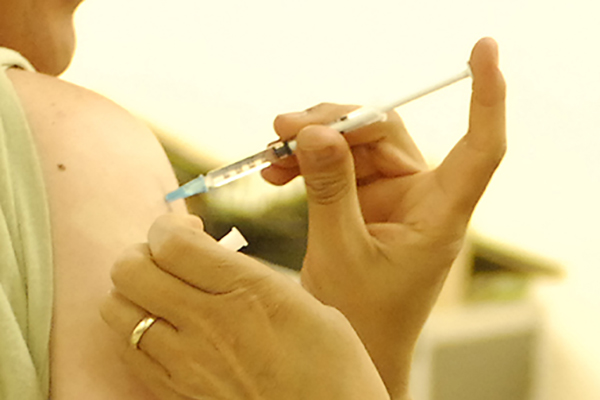
“We have a safe, proven and effective tool to stop the spread of this virus: the measles, mumps, rubella (MMR) vaccine,” they noted. “NCDHHS continues to urge all unvaccinated individuals and families of those ages one year and older to get vaccinated. Public health teams across North Carolina are working tirelessly to track exposures, support local health departments and keep residents informed. If you are unsure of your immunity status, please use the NCDHHS measles immunity checker tool or contact your health care provider, local health department or neighborhood pharmacy to schedule your vaccine today. By working together and ensuring our families are protected, we can stop outbreaks in their tracks and keep all North Carolinians healthy.”
Measles can linger in the air for up to two hours after an infected person leaves a room. It can cause pneumonia, brain swelling and, in severe cases, death. The state health department is urging unvaccinated people ages 1 and older to get the measles, mumps and rubella vaccine, commonly known as MMR.
In Catawba County, health officials said confirmatory testing was pending when they announced the investigation Monday. They identified two locations where people may have been exposed: St. Aloysius Catholic Church in Hickory, Sunday, Nov. 1, from 6:30 to 10 p.m. and Unifour Pediatrics in Conover, Thursday, Nov. 5, from 2:30 to 5 p.m.
Catawba County Public Health is asking anyone who was at either location during those hours to call 828-695-5769.
The state provides information on symptoms, an immunity checker and help finding the MMR vaccine on its measles information