


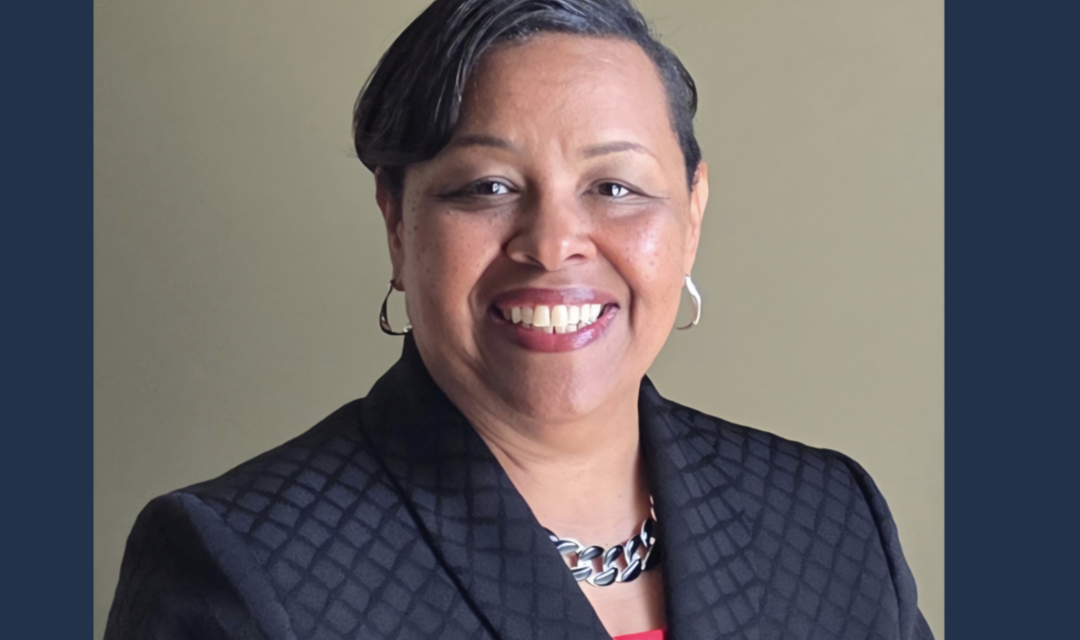
Guilford County has promoted a longtime insider to one of the most important – and demanding – jobs in local government, putting a veteran social worker in a position that touches tens of thousands of lives every year and oversees a budget that rivals that of many small towns.
The Guilford County Division of Social Services recently announced that Shelia Stokes has been promoted to deputy director of the department – a role that will place her at the center of everything from child protective services to Medicaid enrollment to programs for the elderly and disabled.
Stokes isn’t new to the department or to the kinds of challenges that come with it.
She has more than 25 years of experience in social services and behavioral health systems, including over two decades in Guilford County alone. She started with Guilford County in 2004 as a social worker and worked her way up through a long list of roles: program manager, quality assurance and training supervisor, social work supervisor and in-home services social worker.
Most recently, from 2019 to 2025, she served as the division director for Children’s Services, which is arguably one of the most scrutinized and high-pressure branches of the entire department.
That background matters because the job she’s stepping into is not just another management role – it’s one that requires balancing massive budgets, complex federal and state rules, and, perhaps most importantly, the safety and well-being of the county’s most vulnerable residents.
In her new position, Stokes will oversee the implementation and coordination of the department’s programs and services, while also helping align internal operations with community partners. She’ll also provide leadership over major divisions such as transportation, human resources, planning and professional development.
Guilford County Social Services Director Sharon Barlow made it clear that the promotion is as much about leadership style as it is about experience.
“Shelia’s leadership, experience, and deep commitment to social work and public service make her well-suited for Deputy Director of Social Services,” Barlow said in regard to the new number 2.
If that sounds like standard government praise, the numbers behind the department tell a bigger story as to why the job matters.
The Guilford County social services operation is enormous. The department’s budget for fiscal year 2026 is over $100 million.
To put that in perspective: that’s more than many entire municipal budgets in North Carolina.
A large portion of that funding comes from federal and state sources – more than $66 million – however, the county itself is still on the hook for over $38 million.
And then there’s the workforce: The department has more than 800 full-time positions, after adding dozens of new roles to deal with rising caseloads and increasing demand for services.
Here’s some of what the department handles every day: child welfare cases, foster care placements, Medicaid eligibility, food assistance, adult protective services, transportation for vulnerable residents, and a lot more.
Recent data shows the department has been expanding in response to growing demand. The county commissioners have added positions specifically to address foster care and child assessments, food and nutrition assistance and daycare services – all areas where caseloads have been increasing.
One of the department’s recent additions came with its Medicaid expansion program, where Guilford County exceeded expectations by enrolling more than 35,000 people in a single year – surpassing a two-year goal.
Though the job comes with big numbers and some success stories, it also comes with real challenges – and a history that hasn’t always been smooth.
The department has faced controversy in the past, including a food stamp scandal years ago that led to the resignation of a previous director. That episode raised serious questions about oversight and accountability and put the agency under intense public scrutiny. The scandal, and this is no joke, was so large that at one point it looked as though Guilford County’s ineptitude and cover up could lead to a complete cut off of food and nutrition benefits to the entire state of North Carolina
There have also been tragedies tied to the system.
In one widely discussed tragedy, children under DSS oversight died in a house fire – an incident that sparked concerns about monitoring, placement decisions, and whether warning signs had been missed.
Those kinds of cases underscore the reality that social services departments operate in a high-stakes environment where mistakes can have devastating consequences.
At the same time, the department is dealing with ongoing structural challenges.
One of the biggest issues is staffing. Caseloads are rising across multiple areas, and recruiting and retaining qualified workers remains a constant struggle for the division.
That’s not unique to Guilford County – it’s a problem seen nationwide – but it has very real local impacts. For example, the county reports that about 70 percent of children in foster care are placed outside the county, largely because of a lack of available foster homes.
There are also increasing demands in adult services – including more cases involving people without monetary support, which shifts additional costs onto the county.
And then there’s the human side of the job that doesn’t always show up in budget spreadsheets: threats and even assaults against staff, often involving individuals dealing with mental health or substance abuse issues.
Efforts are currently underway to increase staffing in child protective services and adult protective services, expand foster care options, and develop new prevention programs aimed at keeping families together and reducing the need for foster placements.
There’s also a push to create specialized social services teams focused on early intervention, aging services, and cross-agency collaboration – all part of a broader strategy to move from reactive services to more preventive approaches.
So Stokes should have her hands full.
Her experience in Children’s Services might prove especially relevant, given the ongoing issues with foster care placements and the push for more prevention-focused programs.
The county is aiming to increase staffing, expand foster care resources, improve coordination with community partners, and enhance training and leadership development – all while managing rising demand and limited resources.
While the director sets the overall vision of the division, the deputy director is often the one making sure the day-to-day operations actually work – that programs are implemented, that staff are supported, and that the system holds together under pressure.




The foster home issue has been well documented. There is not a lack of interest from people willing to foster children, there is lack of support from DSS, overwhelmingly burdensome bureacracy, and then dismissive or belittling treatment from social workers toward foster families and being treated like an overall scumbag by workers who come “inspect” your home.
Maybe don’t treat well-meaning people like crap and ghost them when they need support and they might be more inclined to foster a child. Until then, these poor kids must continune to sleep on the floor at the DSS office.
There is a great deal wrong with NC foster care systems. I suggest it starts with the cutting of funding that has now led to NC funding the smallest portion of child welfare costs than any other state stressing county-level resources in the same why their cutting of funding for NC public schools is doing the same thing with NC now the lowest funded public education system in the US.
As the funding is cut, local resources are overworked and turnover in the NC foster care system is at an all-time high leaving even fewer resources to handle the caseloads. A cycle of reduced resources that is leading to kids being harmed.
We need State Legislature to prioritize funding for NC Children’s futures vs the cutting of this funding for the benefit of corporations.
I don’t envy Shelia Stokes job and the challenges she faces with the minimal support from the State.
.
Wow.
“Professor Chris” is an expert on everything….
You’re right Al. Or he’s right in his own mind. At least he didn’t try to blame President Trump in this post.
Oh, do you mean Christian C Rice/Chris/professor/Polly Pocket/Sybil?
Give him time.
100 million creates make-work jobs for 800 “positions”. Anything wrong here?
Name something our govt does well.
I don’t envy her, it’s a thankless job. One responsibility not mentioned in your well written article Chris is the policing of the funds from the state and federal coffers.
Who’s watching the henhouse? The administrators are growing faster than the patient count, but that’s typical of the bureaucracy. Why not privatize it?
So, when is the root cause analysis and fix going to start. Sounds to me like throwing $$$ at a problem that no one want to solve.
Throwing money at problems is usually not the solution. Finding ways to be more effective and efficient is the solution in most cases.
Finding ways to be effective and efficient is not an approach Guilford County uses. Their approach is the throw $$$$$ at any problem. Look at the joke called schools. Also , check your new tax rate you’ll be paying. Effective and efficient….don’t think so….not in Guilford County.
cat herders b special