

Up, up and away.
It’s not about balloons; it’s about the tax bills Greensboro residents and property owners are going to get this summer. And the damage is just beginning: The Guilford County Commissioners are still trying to figure out what they’re going to do, and there the question isn’t whether the county will have a tax increase on top of Greensboro’s, the question is simply how much that increase will be.
The Greensboro City Council adopted its new 2026-2027 budget Tuesday night, June 16, and that budget comes with a major property tax rate increase.
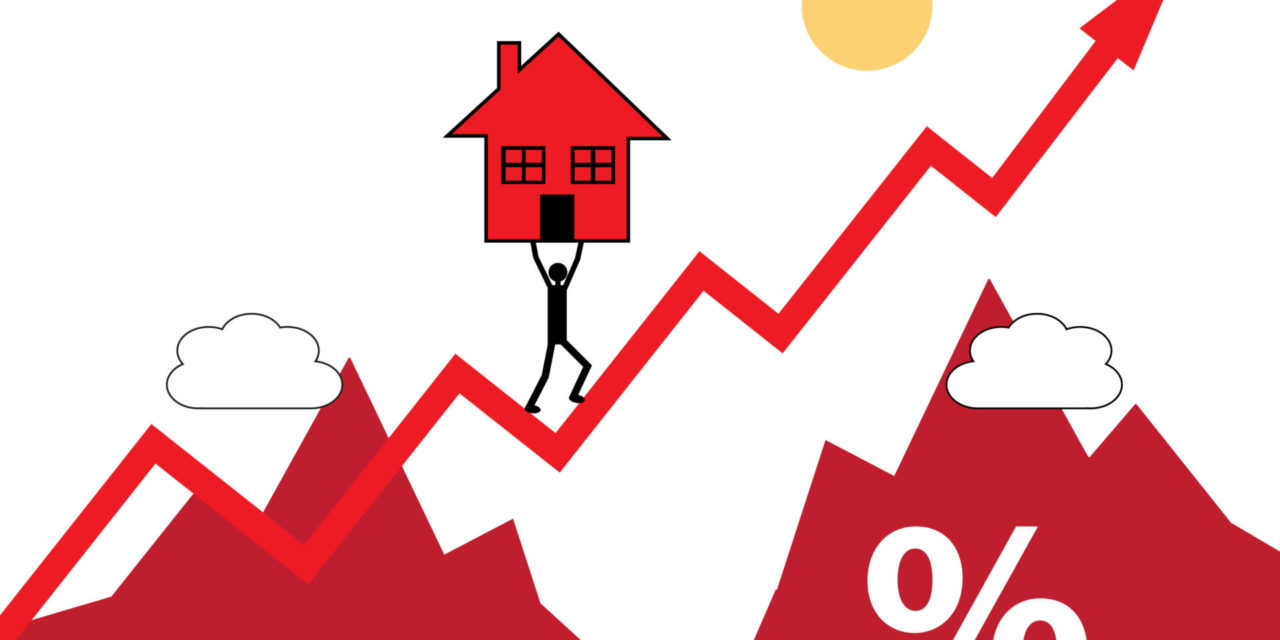
The new budget includes a total City of Greensboro property tax rate of 79.85 cents per $100 of assessed property value. That’s a 12.6-cent increase over the current city property tax rate of 67.25 cents.
The city’s all-funds budget is $909.8 million and the General Fund budget is $485.3 million.
The tax increase is being applied to the old property values – determined in 2022 – rather than the new Guilford County revaluation values because of Senate Bill 889, the “Property Tax Reappraisal Moratorium,” which passed the North Carolina General Assembly last week.
That bill prevents counties with reappraisals effective Jan. 1, 2026 from using those new values for the 2026-2027 fiscal year. For Guilford County, that means that the county, Greensboro, High Point, the county’s towns and fire districts have to build their budgets using the older 2022 property values instead of the new 2026 values.
That might sound like good news for taxpayers, and for some property owners it is. But it also means the city has to use a much lower tax base.
Greensboro’s budget documents show the city had expected to use an assessed value base of about $56.1 billion after the revaluation. Without the revaluation, the city has been working with a tax base of about $40.1 billion.
In other words, the City of Greensboro lost about $16 billion in taxable value for budget purposes.
The city had originally been looking at a much lower tax rate on the new, higher values. Under the budget adopted Tuesday night, Greensboro instead is charging a higher rate on the older, lower values. City officials said one penny on the tax rate would have generated about $5.6 million after the revaluation. On the current values, one penny only generates about $4 million.
So, under the old values, each penny does less work.
Greensboro officials said that the new rate is needed to maintain core city services, including public safety, parks and recreation, solid waste and recycling, road maintenance, water quality and basic city operations.
“This budget is about maintaining the quality of life our residents expect while preparing Greensboro for the future,” City Manager Trey Davis stated in the city’s press release regarding the new budget. “We understand that any tax increase is significant, and that’s why we’ve worked diligently to ensure every dollar is invested in services and infrastructure that directly benefit our community.”
The budget includes funding for 30 additional police officer positions, expanded Behavioral Health Response Team coverage, continued investment in communications systems and public safety equipment, restored hours at lakes and recreation centers and additional support for solid waste, recycling, roads, facilities, utilities and water quality.
Also in the new budget is more than $20 million in additional funding for public safety.
The budget includes about $3.4 million in new General Fund expansion, meaning city officials are arguing that the main driver of the increase is not a large list of new programs but the cost of maintaining existing services. Those costs include employees, vehicles, radios, software, equipment replacement, fuel, utilities, disposal costs, contracts and debt-supported equipment.
But that’s not all: The city is also increasing the water utility rate by 11.4 percent. So in addition to higher taxes, your water bill is going up.
According to the city, water treatment chemical costs alone have increased by about 50 percent over the last four years. The city also cited higher construction costs, including a roughly 38 percent increase in asphalt costs and a roughly 66 percent increase in stone material costs over the last six years.
Greensboro Mayor Marikay Abuzuaiter warned the Rhino Times last week that the city could be forced into exactly this situation if Senate Bill 889 passed.
“We’re going to have to look at whether we’re going to have to raise the property tax rate,” Abuzuaiter said at the time.
And that’s exactly what the City Council did this week.
Abuzuaiter also said last week that Greensboro had been preparing its budget under the assumption that the city could use the new revaluation values and then lower the tax rate. She said she would have liked to go revenue neutral but she didn’t believe that would cover the city’s rising costs.
Abuzuaiter said the city is facing higher costs in employee health care, public safety, fuel, asphalt, diesel, buses and chemicals used in the water system.
She also told the Rhino Times the city had already cut back in some areas and had been under a hiring freeze for nearly a year.
“We’re not wasting any money,” Abuzuaiter said last week.
The city’s budget presentation stated that departments have made reductions and identified savings – including 5.5 full-time equivalent position reductions, operating savings, stormwater charge reductions and current-year vacancy savings.
The city also cited printer consolidation, improved reimbursements, fleet monitoring, better routing, inventory controls and asset management as examples of operational efficiencies.
Davis said the city isn’t funding luxury items, just true needs.
“The bottom line is simple,” Davis said. “These are not luxury services. They are the essential services that residents rely on every day. This budget allows us to maintain those services, respond to growth and continue building a stronger Greensboro while remaining mindful of the financial realities facing our residents.”
The city’s own examples show that the effect of the no-revaluation budget won’t be the same for everyone. For a home currently valued at $128,700 that would have increased 82 percent under revaluation, the no-revaluation approach results in a tax bill of about $1,028, compared to about $1,368 if the new revaluation had been used with the lower proposed rate.
For a home currently valued at $307,300 that would have increased 22 percent under revaluation, the no-revaluation approach results in a tax bill of about $2,454, compared to about $2,182 under the revaluation scenario.
So the revaluation delay helps some property owners and hurts others compared to the budget Greensboro originally expected to adopt.
The city argues that the no-revaluation approach makes the tax impact more proportional to current values and avoids some of the large jumps that would have hit lower-valued homes whose assessed values rose more sharply in the revaluation.
Greensboro isn’t the only local government dealing with the fallout from Senate Bill 889.
Guilford County is now facing the same problem.
The Guilford County Board of Commissioners had been scheduled to adopt a new county budget this week, but county officials changed that schedule after Senate Bill 889 passed.
The commissioners have called a special work session for Thursday afternoon, June 18 to figure out what changes need to be made to the county budget.
Chairman of the Guilford County Board of Commissioners Skip Alston warned weeks ago that the legislation would force the county to rethink its budget.
Alston said the county would either have to raise the tax rate on the old values or cut services.
“We’re going to have to probably cut some services,” Alston said. “We’re just going to have to adjust accordingly.”
Alston warned just before the bill passed that Guilford County could have trouble funding additional employees for the sheriff’s office, EMS, social services and other departments.
“We have thousands of other people that have moved into Guilford County since last year,” Alston said. “The services for them have to be provided.”
At the time, Alston said he didn’t want to simply raise the county tax rate enough to recover all of the money that would be lost by being forced to use the older values. However, the math may leave county commissioners with few pleasant choices.
Greensboro has now made its decision: a 79.85-cent tax rate and a 12.6-cent increase. Look for Guilford County to pile onto that.




So we have all these “new” residents, are they not paying taxes? Alston makes it sounds as if no revenue is been produced by the new residents. I don’t hold love to see how many pet projects that Greensboro and Guilford are wasting my money on. Looks like I need to do some investigating!
No shock here from the city or the county. More tax and spend and screw the struggling tax payer. No talk of tax reduction and or staff reductions. While listening to the stuff coming out of the mouths of liars, reading between the lines it is obvious who is being protected from the higher tax rate. How many new programs can we expect for helping certain citizens try to pay their taxes? And the smoke about preparing for the new jobs coming , well, what is the population growth in the county and city right now? I only want new tax paying citizens, not the invited homeless or college kids who don’t live here or the pie in the sky possible “future” new citizens. Smelling a big ” bust” in the so called Guilford County and Greensboro. Glad I did not vote for any of these clowns in the county and city. I hope if you did that you are pleased.
Again it is never mentioned that they would to look at ways to reduce expenses, just maintain their wasteful spending to support pet projects and gain support from their base. GREENSBORO BEND OVER!!!
Property taxes are onerous, asinine, and an unfair manner to fund county and city governments. It is onerous because property taxes are a burden to property owners whose property is always encumbered by taxes; it is asinine because property taxes are nonsensical, a taxation policy that clearly favors non homeownership; and unfair because there are those who are exempt from property taxes, and those exempt are selected by the very government that imposes property taxes on others, and their taxes are higher because the property taxpayers must pay taxes for the exempt.
If I were the legislators that voted for the moratorium, I would view actions by Greensboro and Guilford County as an affront to the state by city and county officials. It is obvious that the state’s majority in Raleigh noted that the reason for the revaluation was to provide city and county governments with a windfall of money with which to spend on pet projects and hiring more and more friends and family and failing schools. But then I could be wrong and the Raleigh legislators whispered sweet nothings in the ears of Greensboro and Guilford County elected officials, saying not to worry, you can always raise the rate to the moon and get the same in taxes. You decide which is more likely.
Property taxes have been a thorn in the backsides of property owners who pay property taxes. It is a totally outdated means to fund county government. It is past time to find another way. The current taxation can be manipulated by the very people elected to represent residents of the county.
We’re not wasting money? Only essential services? OMG. Divisions like Belonging and Engagement are essential, really? Empty buses, empty sidewalks, and a $30 million Greenway downtown, essential? A cure violence program after 3 murders in a week, essential? Do you guys really think the public believes you when you say there was nothing to cut? GTFOH.
How do you know a politician is lying? Their lips are moving.
Marikay and Trey just don’t care. They just blurt out nonsense knowing that the unwashed masses can’t change a thing. They might as well have just said they are going to do whatever they want, taxpayers be damned. Because that is exactly what happened. If you are a renter and are just shrugging your shoulders right now, just wait until you get your new lease rate. Landlords will be passing the expense on to you ASAP.
And trying to blame the state for increasing your budget is even more stupid, Marikay. You chose to raise the budget, not the state. If you are adding $80 million to your budget, you’re taking it from us either way. You’re just slicing up the same pie a little differently. It’s like saying, “Because of the state, now I have to take 20% of $50 when we really only wanted to take 10% of your $100.” So dumb, but the politicians do not care.
————–
Exactly.
Don, the city is raising water rates by 11%. What I find interesting is there is a city fire hydrant on Wayne Rd. that runs continuously 24/7 and has for many years. It’s in the curve where the 2 small lakes are next to Sedgefield golf course. Sedgefield is not in the city limits and doesn’t pay property taxes. I found out this week from a friend who works for the city water department that this hydrant runs to keep the golf course irrigation lakes full. The upper crust doesn’t want anything but a green golf course. The irony of all this is that the city Doesn’t charge Sedgefield for all this water that has to be chemically treated, remember the mayor said that one of the reasons to raise rates was how much chemicals cost. Why should city taxpayers have to pay for their water but we give a non tax paying entity free water.
That’s crazy.
Go down Groometown Rd. turn right on Wayne Rd. In about a mile you will see the hydrant on the right
No crisis is a problem for this city or county. Just an opportunity that must not go to waste.
ATMs (aka taxpayers) of Greensboro,
“As you sow, so shall you reap”…or in this case so shall you be raped.
Nothing more to be said
Peasants of the Omnipotent One’s fifedom,
Grease up…your next
Well all you people who voted these democrats into office are now getting what you voted for!!! Higher taxes!!!!
I disagree, it is the great majority of voters who didn’t show up at the polls that are responsible.
Use it, or lose it.
“core services” is all that govt should provide. Parks and recreation are not essential services. Everything else is confiscation of wealth in order to buy votes and feather nests.
“We have thousands of other people that have moved into Guilford County since last year,” Alston said. “The services for them have to be provided.”
Sounds like we need an “other people” tax.
What does that even mean? lol
Chris….I mean Polly Pocket,
I don’t know…what does it mean?
That’s a 19 percent tax increase on the city side. Gosh darnit guess it’s too bad for me I didn’t get a 19 percent raise last year. The NC legislature is watching and the parameters haven’t been set as of yet for the permanent rules on 889. I hope there is a little surprise for government bodies who have taken these type actions.
ANYBODY get an after-tax raise of 19%? How about all of we Seniors living on nearly-fixed incomes? Seniors who have paid off the last mortgage and other debts who now suffer from even more taxes and inflation, with no means of recovering any of it?
This is nothing less than the confiscation of property – Communism.
It means that politicians encouraged people to move to Guilford County knowing full well that the growth would put a serious strain on the current residents and services, but the politicians did not care because of their power to raise property taxes and then claim that services for the newcomers are needed. Well, politicians, you should have thought about that before encouraging newcomers. There is a limit to growth if a goal is to consider the current residents and property taxpayers who have paid property taxes long before some commissioners moved to Guilford County, e.g Mary Beth Murray in District 4. It appears to me that Murray lacks self-control. Maybe that’s why she is a Democrat and votes in tandem with Skippy.
Newcomers will pay taxes here, incl property taxes. So why do residents need to pay more property taxes?
If you drive out W. Market Street, past the tank farm you will see a huge empty field on the right. This is where a HUGE airplane manufacturing plant will be located, with planes being delivered by 2033. There will be over 13,000 jobs, plus a huge workforce need to build the plant. This means mucho dinero in wages and lodging paid here during the construction. All for the City to tax.
Those thousands who are moving into the county and city will be paying taxes if they move into a house and the owner of the apartments will be paying taxes on the property. Unless the governments are giving new citizens a free ride. The basis to be used to charge the taxes to the citizens has nothing to do with what the budgets are.
So you expect people to move into homes without water/sewer, solid waste collections, police & fire protection, etc? It’s a true “damned if you do, damned if you don’t” situation.
Chris….I mean Polly Pocket,
You are the All Knowing. Please enlighten us with your vast wealth of knowledge.
Really Polly. I’m over 70 I grew up and we had none of the things you listed. I don’t know where you came from but people can live and thrive without any of those things. The HELL with government in my life.
If conservative homeowners acted like antifa city hall would be on fire
———————-
“This budget is about maintaining the quality of life our residents expect…” – Greensboro City Manager.
How dare you. How dare you lie so shamelessly as you pick the pockets of the people of Greensboro.
You want to improve our quality of life?
STOP ROBBING US.
Unbelievable. If the city and county thieves can’t get into your wallet one way, they devise another way. This is heading toward a very bad ending, with the working class and investing individuals and businesses leaving the county, and the rapidly expanding welfare crowd staying.
The state moratorium Bill is in response to the concerns of the voting citizens. The response to the Bill from the county and the city is an absolute tone deaf response to the citizenry. They made no attempt to adjust their budgets. They were going to get money for their budget regardless. Taxpayer be damned.
So they cannot use our new property values this year but they can use it next year. Next year the new rate per dollar will still be enforced on the new re-evaluations. That is when we’re really going to feel a increase in the money we pay in our property taxes.
SURPRISE, SURPRISE, not!
Just thank your neighbors that voted these thieves into office, OH! And don’t forget those that didn’t vote at all.
Am I mistaken or did Marikay claim that she was in favor of a revenue neutral tax budget during her campaign for mayor? Even if that is not the case she ran on a platform of keeping taxes as low as possible. This budget and tax increase is a clear reversal of the promises she made to get elected. There are definitely areas where the budget can be decreased in both the city and county governments, Before I retired, I used to work in behavioral health in NC both for nonprofit and private agencies. The nonprofit sector is rife with fraudulent billing practices and substandard delivery of services. I thought I would escape all that by entering private practice only to see the clinic I worked at face huge fines and payback for overbilling Medicaid. Greensboro human services should be subject to intense vetting, financial and service audits, and evidence based results analysis before receiving large amounts of government cash at the city, county, state, and federal levels. The ex-Lieutenant Governor Mini Soldier’s wife’s human service establishment is exhibit A, having siphoned off $100,000 of government funds. Latisha McNeil’s claim that City Council members pressured her to favor certain preferred providers in the Public Safety arena is most likely 100% true. It happens every day in human services and Greensboro citizens should wake up and demand more oversight into how funds are being allocated to NGO’s by the City and County. Millions could be saved on a number of levels. THANK YOU FOR YOUR ATTENTION TO THIS MATTER!
It’s time to move out of this blue city.
Rockingham County.
The 30 police officer positions are the 30 the PD had to give back to raise the salary ranges. After falling so far behind veteran officers were leaving for agencies like Burlington. Don’t act like you are contributing to the PD. You are just reinstating what they had to give up so GPD wasn’t the lowest pay in the state.
Davis was taken from the PD as a captain, moved to assistant manager of public safety and then city manager. He serves the council’s purpose. What makes him qualified to create (with his assistants) an almost billion dollar budget. Go back to preaching.
Property taxpayers, demand a new revaluation next year. Why? Because housing prices are falling. Skippy knew the value of housing was at an all-time high this year. Remember, he serves/served on NC Real Estate Commission, appointed by Roy Cooper. Another reason to vote for Michael Whatley who is the Republican candidate running against Roy Cooper in November 2026. Alston’s connection to real estate prevents from legitimately claiming ignorance about the housing market. In fact, Alston should withdraw himself from the tax rate issue because he is so involved in real estate, giving him firsthand knowledge of the industry and how best to squeeze the property taxpayer.
I’d like to point out the sheer absurdity of the idea that the tax base has increases from 40 to 56 billion in around 4 years. The sheer notion of that increase over that time period simply defies common sense unless the streets of greensboro are paved with spaceX stock.
What happens when you elect a bunch of people with no idea how to run a government? This.
Only answer is a tax revolt. Refuse to pay. They can afford to foreclose on everyone property.
—————–
Why don’t we at least all agree to wait until the last minute to pay our Property Tax? They can’t do anything to us legally, since we paid our tax on time. But it will certainly f**k with them.
And send them a message.
Anyone in favour?
I’m in.
Austin I’ve been doing that very thing for over 10 years. I never thought I was revolting, I just used my money to make interest instead of the county using it.
This a direct result of all the Covid funds cities and counties got from the federal government when Biden was president. The federal government put all these cities and counties on a drug call free money and they all went out and raised their employees salaries, increased head counts, offered more money to NGOs and spent it on reoccurring expenses rather than using it for infrastructure that can be a one time cost. These cities and counties have created a huge problem that can only be fixed by using smart business solutions and principles. Look at what percentage of the population uses on a daily basest and cut the budget that way. We have to stop this addiction of free money. It will not be easy, just ask a drug addict or alcoholic how difficult it was to cure themselves of addiction. But it has to happen and happen now!!