
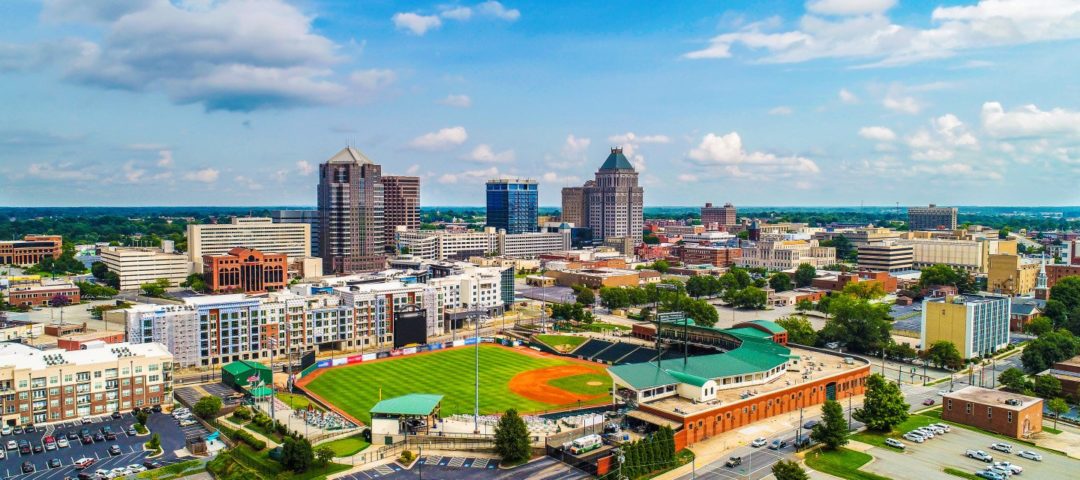
Downtown Greensboro leaders have spent much of 2026 attempting to address some very tangible problems downtown – parking headaches, homelessness, vandalism, business closings and complaints about public safety.
Now they’re also trying something a little less tangible: getting the people who live downtown to actually know each other.
On Saturday, Oct. 3, the recently revived Downtown Neighborhood Association – appropriately known as DNA – will hold a Club & Resource Fair as part of Downtown Greensboro Inc.’s First Saturday Stroll on Elm.
The idea is to introduce downtown residents to clubs, organizations and resources already operating in and around the center city and, in the process, make downtown Greensboro feel a little more like a neighborhood and less like simply a collection of restaurants, bars, apartments and office buildings.
The fair will run from 1 p.m. to 5 p.m. on the north side of the street closure on the 300 block of South Elm Street between McGee and Washington streets. The First Saturday Stroll begins at noon and is free and open to the public.
The event is one of the first tangible products of the Downtown Neighborhood Association, which Downtown Greensboro Inc. revived in August after a similar residents group had been dormant for years.
Interim DGI Executive Director Rob Overman said that the new fair came directly from what residents said they wanted after the organization got underway.
“This is exactly what we hoped would happen when we revived the Downtown Neighborhood Association,” Overman said. “Residents identified a need, and the association built something to meet it. A downtown where neighbors know each other and know where to plug in is a downtown where people want to live.”
That effort didn’t arise in a vacuum.
For much of 2026, downtown Greensboro has been having a very public identity crisis.
In February, downtown business owners and residents went before the Greensboro City Council and complained about parking, homelessness, public safety, construction disruptions and declining customer traffic.
The complaints came as several longtime downtown businesses shut their doors, including M’Coul’s Public House, Dame’s Chicken & Waffles and Liberty Oak.
Business owner Kim Grimsley-Ritchy told city leaders at the time that Greensboro’s problem wasn’t that people didn’t know about downtown.
“People know where downtown is,” she said. “They are choosing not to go because the experience no longer works for them.”
The city responded to some of those concerns by increasing downtown police visibility and later changing downtown parking policies – including making city-owned surface lots and on-street spaces free beginning at 5 p.m. on weekdays.
DGI also created an Emergency Stabilization Fund this spring that can reimburse qualifying small downtown businesses for costs caused by broken windows, forced entry, vandalism, graffiti and similar unexpected damage.
Then another issue became apparent this summer: downtown residents and business owners wanted more say in what city and downtown officials were doing.
That was driven home particularly clearly when the city proposed closing portions of South Elm Street to vehicle traffic on weekends for a pedestrian plaza pilot program.
The program was supposed to begin in August, but City Manager Trey Davis delayed it after business owners, property owners and residents argued they hadn’t been given enough opportunity to help shape the plan.
“What we learned before launch is that our engagement was not finished,” Davis said at the time.
That episode was followed almost immediately by DGI’s announcement that it was reviving a downtown residents group. The Downtown Neighborhood Association held its first meeting Aug. 12 and is modeled loosely on the former Downtown Residents Association, which disappeared several years ago.
DGI provides support and resources, but the idea is for residents themselves to decide what the group does and what issues it takes on.
At the first meeting, residents said they wanted more ways to meet one another and more opportunities to become involved in downtown activities. That produced Saturday’s Club & Resource Fair.
The association is also part of a much larger effort to increase the number of people who actually live downtown.
One goal of the city’s long-range GSO35 downtown strategy is to add 5,000 downtown residents over the next decade.
Overman said that when DNA was launched that reaching that goal would require more than simply building apartments.
“To accomplish that, we must cultivate a strong resident community and let their experiences guide how downtown grows,” he said.
Saturday’s fair will include a wide variety of groups, including Natty Greene’s Pour Decisions Book Club, SynerG Young Professionals, Deep Roots Market, Natty Greene’s Run Club, GSO Girls Club, Creative Greensboro, Downtown Ambassadors, Greensboro Jaycees, Union Coffee’s Out The Door Run Club, GSO All Girls Walk Club, the Miriam P. Brenner Children’s Museum and several fitness, wellness and social organizations.
Visitors who don’t live downtown are also welcome.
The Club & Resource Fair will be only one piece of Saturday’s downtown activity.
October’s First Saturday Stroll also includes Squaretoberfest in Hamburger Square, with the Design Archives Street Market from noon to 6 p.m., a stein-holding endurance contest at 3 p.m. and live music and other events continuing into the night.
First Saturday Stroll is held on the first Saturday of each month from April through November and includes vendors, downtown businesses, live music and family activities.
The Downtown Neighborhood Association plans to meet every other month, with social activities and other events planned between meetings.