
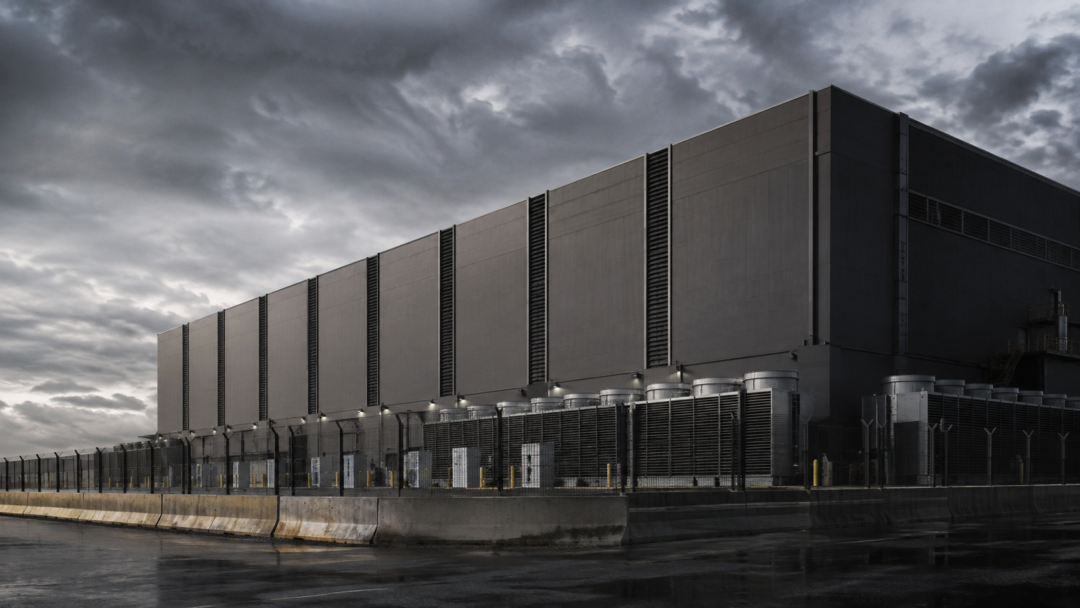
The Greensboro City Council has already spent months arguing about whether the city needs to put the brakes on massive new data centers. Now councilmembers are about to get deep into the weeds on exactly what those facilities could mean for Greensboro.
The city has announced a series of public Greensboro City Council work sessions that will examine the water, wastewater, environmental, regulatory and land-use issues surrounding large data centers as Greensboro works its way through a 180-day moratorium on new projects of this type.
The first of the newly announced sessions will be held at 3 p.m. Thursday, Sept. 10 and will focus on water and wastewater – two of the biggest issues raised during the increasingly heated public debate over data centers this summer.
Greensboro Water Resources Director Mike Borchers and Rebecca M. Slabaugh, director of water planning for the consulting firm Arcadis, are scheduled to lead that discussion.
Two weeks later, at 3 p.m. Thursday, Sept. 24, councilmembers are scheduled to hear about state policies and regulatory frameworks from David Payne, the director of intergovernmental affairs and economic development for the North Carolina Department of Environmental Quality.
Then, on Thursday, Oct. 8, the council will hold a second session on state policy and regulatory frameworks featuring Dr. Angel Hsu, principal investigator with Data-Driven Lab, and Dr. Yuetong Zhang, a postdoctoral research associate with the UNC-Chapel Hill Institute for the Environment.
The sessions will be held in the Plaza Level conference room of the Melvin Municipal Office Building at 300 W. Washington St. and will be open to the public both in person and virtually.
There’s plenty for councilmembers to study.
Large data centers can require enormous amounts of electrical power and, depending on their cooling systems, potentially enormous amounts of water.
Other questions that have come up repeatedly in Greensboro include noise, backup generators, transmission infrastructure, effects on neighboring property, environmental impacts and whether the tremendous investment involved produces enough local jobs and other benefits to justify the costs.
On the other side of the argument is the potentially enormous increase to the local tax base that can come with facilities representing hundreds of millions or even billions of dollars in investment.
The City Council voted 8-0 on Tuesday, Aug. 18, with one councilmember recusing herself, to establish a 180-day moratorium on data centers that require more than 10 megawatts of electrical power.
The moratorium runs through Sunday, Feb. 14, 2027.
During that time, the city will temporarily stop accepting, processing and approving applications for new data centers, data storage and processing facilities and similar uses above the 10-megawatt threshold.
Existing projects that have already been permitted or are under construction aren’t affected.
The City Council initially considered a 120-day moratorium but added another two months following a lengthy public hearing and heavy public opposition to allowing very large data centers to move forward before the city had adopted more detailed rules governing them.
The whole issue has evolved rapidly.
In July, the City Council voted 5-4 against beginning the process required to impose a moratorium. Less than two weeks later, after councilmembers were inundated with concerns from residents, the council reversed course and voted unanimously to begin that process.
The city held a legislative hearing on the proposed moratorium on Monday, Aug. 17 and adopted the expanded 180-day version the following night.
The new work sessions are meant to give councilmembers time to hear from outside experts, examine what other communities are doing and determine what changes Greensboro should make to its Land Development Ordinance before the moratorium expires.
One of the most basic issues is that data centers aren’t all alike: They range from relatively small facilities storing and processing data to massive hyperscale operations supporting cloud computing and artificial intelligence. The amount of water, power, land and infrastructure required will vary tremendously depending on the size and design of the operation.
That’s also a lesson the Guilford County commissioners are beginning to learn.
As the Rhino Times reported last week, the Guilford County Board of Commissioners is planning its own work session on data centers after commissioners attended a major presentation on the subject at the North Carolina Association of County Commissioners Annual Conference in Durham in August.
Guilford County Commissioner Pat Tillman called the data center seminar the highlight of the conference.
Tillman said commissioners heard about many of the same issues Greensboro is now planning to study in detail – water capacity, electrical demand, noise, zoning, tax revenue and the legal issues surrounding moratoriums and development regulations.
One of the messages Tillman said came through clearly was that “not every data center is the same.”
Commissioner Frankie Jones likewise said county officials are still trying to get their arms around the issue and need substantially more information before deciding how Guilford County should handle any future proposals.
No date had been set for the county work session when the commissioners spoke to the Rhino Times last week – though Jones said at that time that he expected it to take place within roughly 30 to 45 days.
The county currently has no data center proposal before it that Tillman is aware of – which gives commissioners an opportunity to establish policies before a major project lands on their doorstep.
Greensboro is learning that lesson the harder way – with the data center issue already generating an unusually large amount of public interest and putting councilmembers under pressure to decide what kinds of projects should be allowed, where they should go and what conditions should be attached.
The Sept. 10 session on water will be particularly important because water consumption has been among the biggest points of contention.
At the county commissioners conference, officials heard examples showing just how dramatically that use can vary: One planned Virginia data center was projected to use as much as 6 million gallons of water per day, while another facility being built there anticipated essentially no ongoing water use because of its closed-loop cooling system.
That kind of variation is one reason both Greensboro and Guilford County officials say they want to get considerably more educated before writing permanent rules.