
Guilford County commissioners got their first detailed look Thursday at what next year’s budget could look like if state lawmakers prevent the county from using its recent property revaluation numbers.
The answer: A lot different.
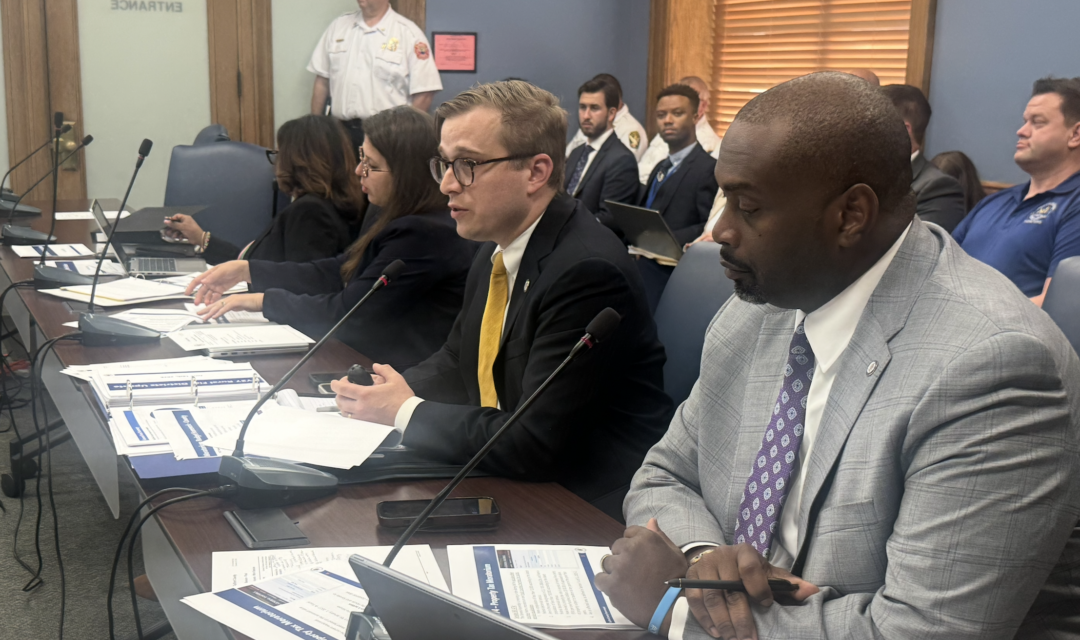
During a Thursday afternoon budget work session, Assistant County Manager Toy Beninga and County Manager Victor Isler presented commissioners with a revised budget framework built around Senate Bill 889 – legislation that would delay the use of Guilford County’s new property values for one year.
Under the scenario presented by county staff, maintaining the current property tax rate of 73.05 cents per $100 valuation would require removing approximately $83.7 million from Isler’s original recommended budget.
The presentation came as county officials continue waiting to see whether Gov. Josh Stein signs, vetoes or allows the legislation to become law. If he vetoes it, everyone seems to think the votes will be there to override that veto.
Following the work session, the Board of Commissioners voted during its regular meeting to hold a special meeting at 4 p.m. on Thursday, June 25, to adopt a new budget.
However, Thursday’s discussion made clear that commissioners aren’t simply deciding whether to accept or reject the county staff proposal.
Instead, they’re weighing a series of choices involving spending cuts, tax increases and the use of county reserves.
Throughout the presentation, Isler repeatedly emphasized several priorities he said county leaders have discussed for months, including maintaining a structurally balanced budget, continuing employee compensation plans, supporting public education, addressing deferred maintenance and preparing for future growth.
“We have been engaged in conversation around our core budget principles,” Isler told the commissioners.
One of the biggest concerns raised by county staff was the county’s growing reliance on fund balance – the savings account, that is – to pay for recurring expenses.
As part of his original recommended budget, Isler proposed reducing the amount of fund balance used for recurring operations from about $17.8 million to $10 million.
Under the revised moratorium budget presented Thursday, that reduction disappears and fund balance usage would remain at roughly the current level.
County staff also warned that maintaining the current tax rate would require delaying projects, reducing proposed spending increases and relying heavily on vacant positions to generate savings.
Beninga said the county would need to maintain approximately 180 vacant non-public-safety positions throughout the fiscal year to achieve about $10 million in salary savings built into the proposal.
County officials also outlined delays and reductions involving capital projects, technology upgrades and proposed staffing additions.
Among the items removed from Isler’s original proposal were funding for street outreach and emergency sheltering, several new social services positions, environmental health positions, parks maintenance positions, portions of the planned expansion of the County Attorney’s Office and replacement of the county’s financial management software system.
At the same time, county staff said they were attempting to preserve several priorities identified by commissioners, including merit pay increases, compensation adjustments for hard-to-fill positions and portions of the county’s deferred maintenance program.
The revised framework would still advance approximately $75 million in deferred capital projects over five years, including funding related to parks, courthouse improvements, county facilities and the planned Women’s and Children’s Residential Recovery Center.
As commissioners discussed the proposals, it became increasingly clear that few appear interested in either extreme option.
County officials estimated that fully preserving Isler’s original recommended budget would likely require a property tax increase of roughly 10 cents.
On the other hand, adopting the moratorium budget as presented would require the county to absorb the entire $83.7 million reduction through a combination of cuts, delays and other measures.
By the end of Thursday’s discussion, Isler appeared to be steering commissioners toward a middle-ground. When pressed by a commissioners as to what he would recommend between Option A, a revenue neutral budget that greatly reduced proposed education spending, Option B that increased the tax rate 4 cents, and Option C, which added 6 cents to the tax rate but did more of what the county was hoping to do this year, Isler said Option B.
Chairman of the Guilford County Board of Commissioners Skip Alston said after the meeting that now the commissioners will need to make some hard decisions.
“I haven’t settled on anything as of yet,” Alston said.
However, Alston told the Rhino Times that he’s currently looking at something in the range of a 4-cent to 6-cent tax increase.
Still, he added, he needs to study the numbers more.
The underlying idea here is that many commissioners consider a 10-cent hike – on the heels of the city’s 12.6 cent hike – to be politically unpalatable. And, to be honest, a 6-cent hike is not going to be greeted with a great deal of affection. A 4-to-6-cent increase would be historically very large. A 6-cent increase would be larger than any other nominal increase this century. In 2022, the board gave citizens roughly the equivalent of a 14 cent tax increase, but that one was hidden behind a revaluation and all the board had to do to collect that whopping increase was leave the tax rates the same after housing values skyrocketed. The tax rate remained the same but property tax bills went up 25 percent, 30 percent or even more in some cases. The political problem now, is that the new state legislation prevents the commissioners from hiding a giant tax increase behind a revaluation.
Alston said one of his primary concerns is determining how much funding should go to Guilford County Schools, while also addressing requests from departments including the Sheriff’s Office, Emergency Services, Social Services and rural fire departments.
“A lot of different departments have needs,” Alston said.
At the same time, Alston said commissioners must continue planning for future growth and infrastructure needs.
“I just want to make sure that we try to get us started on this infrastructure,” Alston said. “We have to be able to start the process of planning for these 25,000 jobs.”
Alston also said he hasn’t yet discussed the revised budget options with other commissioners because they just received the information.
Alston said he expects commissioners to spend the coming days reviewing the options and talking with one another before next week’s budget vote.
Despite the uncertainty created by the state legislation, Alston said he still expects the board to adopt a budget during the June 25 special meeting.
For now, commissioners appear to be moving away from the idea of either a fully revenue-neutral budget or a tax increase large enough to completely restore the county manager’s original proposal.
Instead, the discussion appears headed toward a compromise that would preserve some spending priorities while still requiring reductions from the original budget plan.
Exactly where that compromise lands will to be the central question facing commissioners over the next week.