
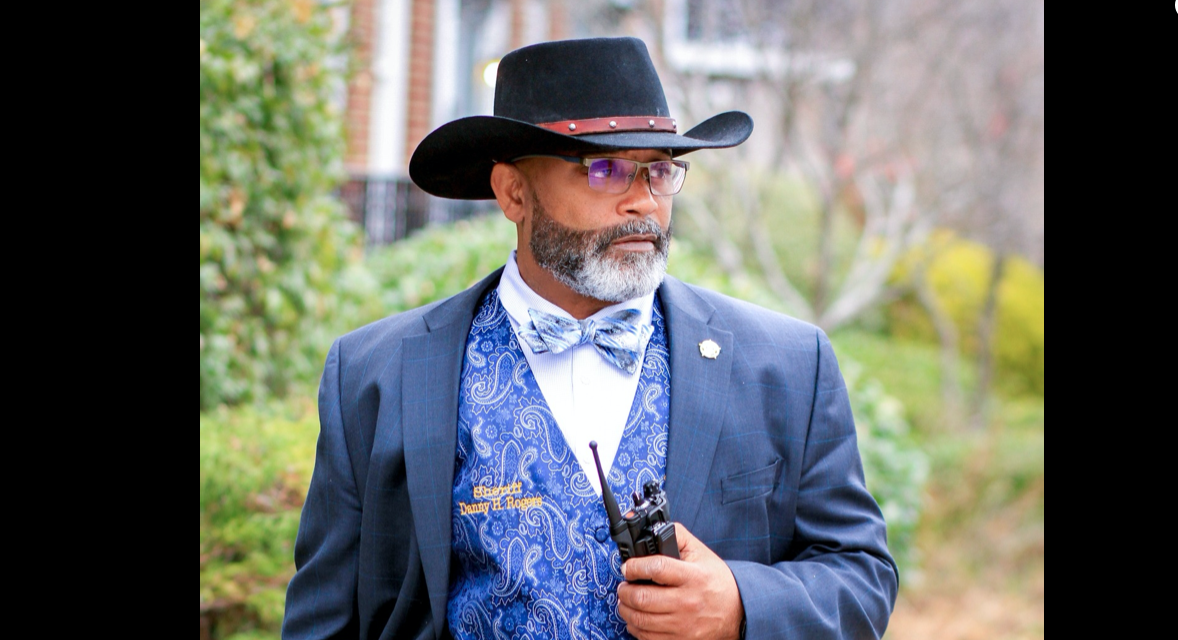
Guilford Metro 911 records show that nearly 200 law-enforcement incidents were logged at Guilford County Sheriff Danny Rogers’ Greensboro home since late 2020 – most of them premises checks, building checks or “special assignments” performed by Sheriff’s Office personnel.
A review of the 73-page Guilford Metro 911 records request found 195 incident numbers associated with Rogers’ residence between December 25, 2020, and March 11, 2026.
Of those, 140 were classified as premises checks, 35 as building checks and nine as special assignments.
The remaining incidents included barking-dog complaints, burglar alarms and suspicious-activity calls.
According to the records, 184 of the 195 entries involved some type of security check or special assignment.
The incident count shouldn’t automatically be read as 195 separate trips by deputies: In some cases, the same occurrence generated separate Greensboro Police Department and Sheriff’s Office incident numbers. Some incidents also involved multiple officers or units.
However, the records show a sustained pattern of deputies checking Rogers’ home, vehicles, doors, windows and, in some instances, an outside building, shed or gate – along with visitations for other purposes as well.
The checks took place throughout the day and night. Ninety-four of the 184 security-related entries were logged between midnight and 6 a.m.
Some were brief drive-bys lasting only a few minutes. Others involved deputies walking around the sheriff’s residence and checking doors, windows, vehicles, gates or other areas of the property.
One June 2021 entry states that a deputy “walked the property,” visually checked every window, pulled on the doors and checked the shed and vehicles.
All this activity wasn’t evenly spread across the period covered by the records. Large clusters occurred during relatively short stretches – apparently when Rogers was away from home.
Five premises checks were recorded on June 23, 2021, followed by four on June 24, five on June 25 and four on June 26. During that week, deputies checked the property in the early morning, afternoon and evening as well as overnight.
On June 23, checks were logged at 1:36 a.m., 1:57 a.m., 4:23 a.m., 2:11 p.m. and 8:27 p.m.
At that time, deputies reported checking the residence, vehicles, windows and doors.
On June 25, one deputy reported walking around the residence to make sure no doors or windows were open. Another deputy, later that day, said the property was walked, each window was examined, the doors were pulled and the shed and vehicles were checked.
Additional checks were logged that evening, as well as shortly after 10 p.m.
The pattern continued June 26, with checks recorded shortly after 4 a.m., 5 p.m., 8 p.m. and 11 p.m.
The records also show several longer “special assignments” in March of 2021.
One special assignment on March 10 involved a deputy who was on scene for about an hour and 27 minutes. Another beginning March 14 involved four units at various times, with one shown on scene for more than four hours.
Additional special assignments on March 15 and March 16 lasted about an hour and a half and two hours and 41 minutes respectively.
The records don’t state the purpose of those four lengthy assignments.
The Guilford County Sheriff’s Office said checks in the records were legitimate security measures resulting from threats against Rogers and the sheriff’s frequent work-related travel.
Sheriff’s Office Public Information Officer Bria Evans stated to the Rhino Times in an email that Rogers received direct threats to his life after his 2018 election and that he was also informed of other threats to his safety.
Evans said Rogers attends conferences, training sessions, legislative events and meetings outside of Guilford County – sometimes remaining away overnight.
“Because these duties take him away from his house on such a frequent basis,” Evans wrote, Rogers requested premises checks for safety reasons rather than for “personal missions.”
Evans compared the service to premises checks the Sheriff’s Office conducts for businesses and Guilford County residents who are away from home. She said that the checks at Rogers’ residence were more frequent because his public position placed him at greater risk.
She wrote: “Each year Sheriff Rogers attends numerous out-of-county (and sometimes out-of-state) meetings, conferences, and other official events related to his job duties. The North Carolina Sheriffs Association (“NCSA”) alone hosts three large multi-day meetings (Spring, Summer, and Annual Business Conferences) in addition to Legislative Day, a number of specialized training sessions and leadership institutes in Raleigh, plus occasional requests to attend high-profile hearings before the NC Supreme Court and Court of Appeals. In addition to NCSA-sponsored events, Sheriff Rogers participates in out-of-county meetings with other North Carolina Sheriffs and attends large conferences sponsored by other law enforcement entities – e.g., the Major County Sheriffs of America (“MCSA”). Because these duties take him away from his house on such a frequent basis (often overnight), he has, understandably, called in for premises checks at his personal residence for safety-related reasons – not personal missions. These are similar to the premises checks that the GCSO performs for local businesses and vacationing Guilford County residents. The fact the checks at the Sheriff’s home occurred more frequently is because the Sheriff’s stature as a public official puts him at a greater and more frequent risk.”
Evans added that some checks occurred while Rogers was at home after he noticed strange vehicles, unusual disturbances or other suspicious circumstances.
She said additional checks may have been conducted while Rogers was recovering at home from eye and neck surgeries.
Evans also noted, “The Sheriff’s prudence is justified as, unfortunately, we live in a time where the President has had several overt attempts made on his life, United States Supreme Court Justices have had their homes targeted by angry demonstrators, and local government officials and employees receive threats on an all too frequent basis. The Raleigh courthouse shooting of two attorneys who simply represented law enforcement officials is just the most recent example of the safety risks to public officials.”
Rogers made similar points in a telephone interview with the Rhino Times.
He told the Rhino that many of the checks amounted to a deputy driving past the property, looking at the house and leaving within a few minutes. Rogers also noted that the records cover nearly six and a half years and he said the nature of his job creates enemies because the Sheriff’s Office arrests people and puts them in jail.
The records do support Rogers’ description of many of the checks as brief.
Numerous entries show deputies clearing the location in roughly three to seven minutes.
The term “premises check,” however, didn’t always describe the same level of activity.
Some entries appear to have been little more than drive-bys. In one June 2021 incident, the recorded on-scene time was four seconds. The deputy wrote that the house appeared secure and that a gold-colored car seen nearby was believed to belong to a neighbor.
Other checks were considerably more involved.
Deputies sometimes walked the property, examined the doors and windows, checked vehicles and inspected sheds or other structures. One deputy wrote that all the windows and doors were secured after checking the residence and vehicles. Another reported checking each window and pulling on every door.
On June 3, 2021, one deputy reported walking the outside perimeter and checking the doors, windows, shed and vehicles. Two deputies were associated with that incident, with on-scene times listed as about 37 and 43 minutes.
The records don’t indicate whether that more extensive level of inspection is standard for ordinary residential vacation checks or whether it reflected the additional security concerns cited by the Sheriff’s Office.
The 911 records also include several occasions specifically identified as vacation checks.
On Christmas Day 2021, deputies conducted checks during the afternoon and again that night, confirming that the doors, windows and vehicles were secure.
Similar checks continued through the days following Christmas, including inspections of doors, windows and vehicles.
Former Guilford County Sheriff BJ Barnes said the number of checks was way, way outside his experience during his roughly quarter-century stint as sheriff.
Barnes said, in his very long time as sheriff, there was only one occasion he could recall were deputies came to his house in an official capacity: after someone broke into his house and detectives responded to investigate.
After being told about the volume of visits and checks from Rogers’ residence, Barnes called the number “highly, highly unusual.”
Barnes lost the 2018 election to Rogers, who took office in December of that year.
The checks for Rogers’ home have been occurring during a period when the Sheriff’s Office has struggled with chronic vacancies and escalating overtime expenses.
The Guilford County Sheriff’s Office recently overshot its personnel budget by an eye-popping $3.9 million, but it’s not because of extravagant new programs or expensive equipment. Instead, the overage is being blamed on a very familiar culprit – a lack of staff, combined with soaring overtime costs that’s been needed to fill in those gaps.
In the county’s fiscal 2024-2025 budget, the Sheriff’s Office overshot its personnel budget by an eye-popping $3.9 million and the overage was blamed largely on soaring overtime costs. The Office has continued in current budget to struggle mightily with overtimes costs and it has been on ongoing concern of the county managers and the county commissioners who had addressed the issue in work sessions.
Some of Rogers’ critics say that by nature he has a somewhat paranoid personality, which, they argue, is one reason, when he became sheriff, he fired more than 25 officers wholesale – some said it was because Rogers thought they would still be loyal to Barnes and try to undermine him as sheriff.
That mass firing when Rogers took office made national news.
It also was considered very unwise by many who noted that, back then and to this day, the Sheriff’s Office is plagued by vacancies. Currently, there are over 80 unfilled positions in the department.
Barnes said, “Danny is very suspicious of everything.”
“It seems like, basically, what it is is that he thinks somebody’s watching him or something like that,” the former sheriff said of the current sheriff.
One former law enforcement officer noted, “Pulling county patrol units, supervisors, and specialized officers away from the public for repeated checks at a private residence could place the general public at risk by reducing the availability of deputies to respond to emergencies, crimes in progress, traffic incidents, and other calls for service.”
The former officer added, “How many drive-bys like that happened in Guilford County last year; how many homicides or home invasions; how many break-ins at the same house occurred? I don’t think that citizens got that same protection. I can understand two or three a month – but around 180 plus? No.”
The 911 records don’t show whether deputies conducting the residential checks were working overtime, whether the checks increased overtime expenses or whether an officer was diverted from a higher-priority call.
There are also other limits to what can be determined from the Metro 911 report alone.
The report shows when an incident was opened, which units were associated with it and how long those units remained assigned. It generally doesn’t show who requested each individual check, whether the deputy was already nearby, how far the deputy traveled or whether the activity interrupted another assignment.
The report also doesn’t explain the meaning of every internal designation. In particular, it offers little description of the March 2021 special assignments, even though several lasted substantially longer than the routine premises checks.
Determining the complete cost would require payroll records, officer schedules and vehicle mileage or location records. Without that information, it isn’t possible to calculate how much deputy time, fuel or overtime was devoted specifically to checking Rogers’ residence.
The records also include several ordinary police calls involving Rogers’ former barking dog, suspicious activity and burglar alarms.
What the records do in fact establish is that law-enforcement personnel checked the sheriff’s private residence repeatedly over a period of more than five years – sometimes several times in a single day and often during overnight hours – at a frequency that Rogers’ predecessor said he never experienced during his long tenure.