One current aspect of the state of the City of Greensboro is that residents are about to see a giant 12 cent-plus tax hike and soon learn how much more taxes the Guilford County Board of Commissioners will slap on top of that. Of course, tax rates aren’t something meant to be focused on in an upbeat, positive, community-facing address like the one the mayor gave on Tuesday, June 23.
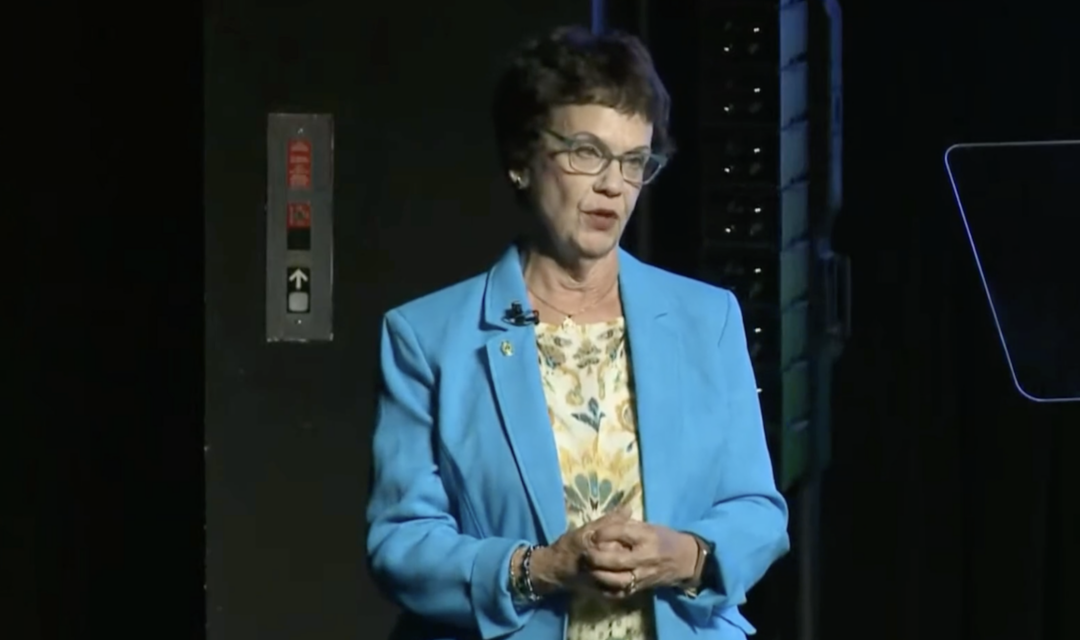
Greensboro Mayor Marikay Abuzuaiter used her first State of the City address as mayor on Tuesday to celebrate the city’s recent successes while unveiling a new framework intended to guide Greensboro’s growth over the next decade.
Speaking at The Pyrle Theater, Abuzuaiter highlighted economic development projects, housing initiatives, sports tourism and community investments before introducing Vision 36 – a long-term strategy designed to help city leaders evaluate decisions and prioritize investments through 2036.
“Vision 36 is a shared framework for answering the same question: Does this make Greensboro stronger?” Abuzuaiter said at the event widely attended by local business and government leaders.
The mayor described the initiative as a decision-making framework rather than a traditional strategic plan. The effort was developed after months of discussions with community stakeholders, university leaders, students, business owners and young professionals.
According to Abuzuaiter, those conversations identified five major challenges Greensboro must address as it continues to grow: talent retention, geographic equity, stakeholder alignment, income structure and staff readiness.
“We have an undeniable opportunity to capitalize on this momentum,” Abuzuaiter said.
The mayor also said Greensboro is entering what could be a transformational period, with billions of dollars in investment flowing into the region and companies continuing to select the Triad for their new operations.
“We have everything we need, but we just don’t always move together,” Abuzuaiter said. “That changes now.”
The Vision 36 framework is built around seven cornerstones intended to help city leaders evaluate future initiatives.
Abuzuaiter said decisions will be measured by how well they strengthen Greensboro, create opportunities for residents, attract and retain talent, encourage partnerships and reinforce the city’s unique identity.
The mayor said the city plans to focus on economic growth, workforce development, infrastructure improvements, housing and leadership accountability as it moves from planning to implementation.
One of the most important examples of that effort is the city’s Road to 10,000 initiative, which seeks to increase Greensboro’s housing supply by supporting the development of 10,000 housing units by 2030.
Abuzuaiter said more than 3,200 housing units have already been completed or are under construction after just one year.
Those projects include more than 1,720 apartments, 805 single-family homes, 662 townhomes and 12 duplexes.
“We’re not just building 10,000 new homes,” Abuzuaiter said. “We’re looking to foster a community for those who live here and those who will come here in the future.”
The mayor also highlighted the city’s Rise Infill Program, a loan initiative administered through the Office of Economic Development. That program partners with lenders to encourage redevelopment of underutilized commercial properties, renovation of vacant buildings and mixed-use development projects.
While much of the address focused on future plans, Abuzuaiter also spent considerable time reviewing accomplishments from the past year.
In her words, everywhere you look, the city is “Winning, winning, winning!”
She pointed to Greensboro’s continued success as a sports destination, noting that the ACC Men’s Basketball Tournament will return to Greensboro in 2027. In the long ago good old day before massive league expansion, the tournaments was almost always held in Greensboro.
She also highlighted the Big 12 Swimming Championship at the Greensboro Aquatic Center and noted that Norway’s men’s national soccer team has used Greensboro as its base camp this month.
“Winning remains a Greensboro tradition,” Abuzuaiter said.
The mayor also recognized the Greensboro Swarm for winning the NBA G League championship during the franchise’s 10th anniversary season.
Abuzuaiter proclaimed June 23 as Greensboro Swarm Day and presented a proclamation honoring the team during the event.
Beyond athletics, she cited several economic development projects and business expansions, including growth by Legacy Federal Credit Union and Hoffman & Hoffman as well as Lumentum’s decision to establish a new manufacturing facility in Greensboro.
The mayor also stressed the importance of locally owned businesses.
“Greensboro is only as big as its small businesses,” Abuzuaiter said.
She mentioned several recently opened businesses and encouraged residents to support local entrepreneurs.
That’s the positive side of things however, Greensboro has also seen some significant business closings – especially in downtown where homelessness, a lack of good parking and other problems have caused owners to shut their doors for good.
Abuzuaiter highlighted a number of public projects completed or currently under construction.
The Windsor Chavis Nocho Community Complex –which truly is an impressive multifaceted project – reached a major construction milestone earlier this month with a topping-off ceremony and remains on schedule to open in 2027.
The mayor described the facility as a future “crown jewel” for East Greensboro.
She also pointed to completion of the Downtown Greenway’s first four-mile loop, which has drawn national attention and fulfilled a vision that’s been in development for more than two decades.
Additional projects recognized during the address included the Guilford County Veterans Memorial installation at Country Park, which features a Huey helicopter, and the newly branded Middle District water tower near Revolution Mill.
Following the speech, Abuzuaiter moderated a panel discussion featuring higher education leaders from Greensboro’s colleges and universities. The discussion focused largely on talent retention, one of the challenges identified through the Vision 36 process.
Guilford College President Jean Parvin Bordewich said Greensboro has changed dramatically in recent years and offers students an increasingly attractive place to live and work. However, she said connecting students with meaningful employment opportunities before graduation remains critical.
Bordewich noted that employers increasingly expect graduates to have practical work experience and said stronger internship opportunities could help persuade more students to remain in Greensboro after earning their degrees.
“If we could tell all of our students you’re going to have a meaningful work experience either paid employment or internships here before you graduate, I think they would stay,” Bordewich said.
Greensboro College President Lawrence Czarda agreed that the city offers significant advantages but said local institutions need to do a better job helping students discover them.
Czarda said many students are unfamiliar with some of Greensboro’s recreational, cultural and entertainment opportunities and suggested that colleges, businesses and local governments should work more closely together to showcase what the city has to offer.
He also advocated reviving Opportunity Greensboro, a partnership that previously brought together university presidents, elected officials and business leaders to address community challenges.
The mayor said in her speech that ultimately her goal is that by 2036 Greensboro will be known not simply for what it built, but instead for how thoughtfully it planned – and who benefited from those investments.