Downtown Greensboro’s long-running list of complaints – parking headaches, vandalism, homeless encampments, business closures and fewer customers wandering Elm Street during the workweek – has now produced another response from downtown leadership: an emergency fund that’s meant to help small businesses survive unexpected damage.
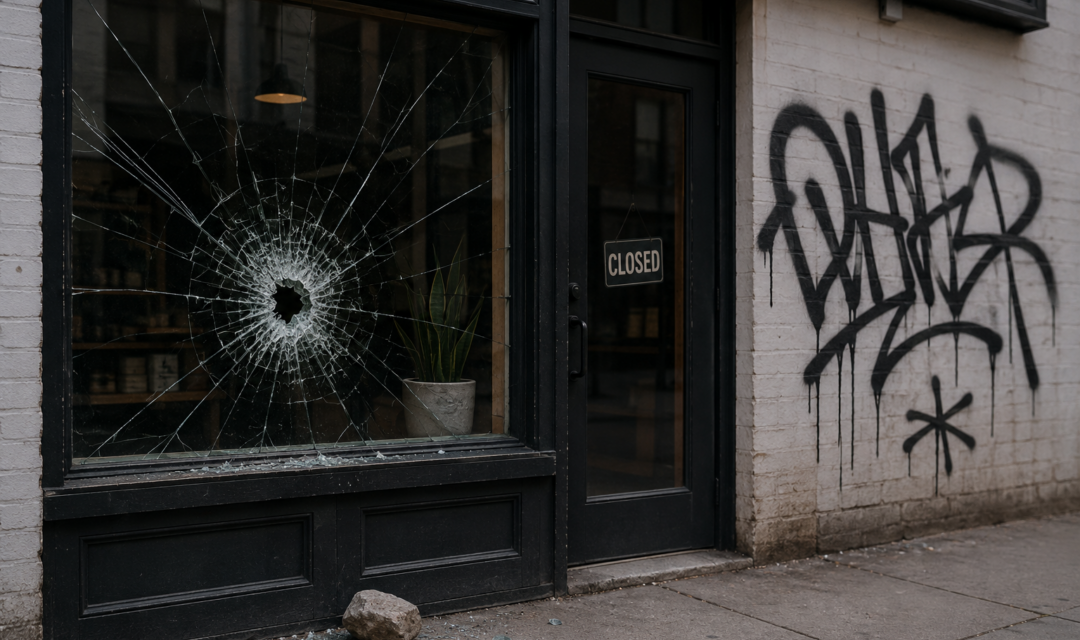
Downtown Greensboro Inc. announced on Wednesday, May 27, that it’s launching a new “Emergency Stabilization Fund” that will reimburse qualifying downtown businesses up to $2,000 a year for vandalism, forced-entry repairs, graffiti removal and other unexpected property damage.
The fund is aimed specifically at small, street-level businesses located inside the Downtown Greensboro Business Improvement District.
The timing of the new program is notable because it comes during one of the roughest public stretches downtown Greensboro has experienced in years.
Downtown business owners have spent months publicly complaining about parking confusion, homelessness, safety concerns, construction headaches and declining customer traffic. Several high-profile downtown businesses have also shut down recently – fueling growing concerns that downtown Greensboro has become a harder place for small businesses to survive.
Now DGI is essentially acknowledging another growing reality downtown: sometimes businesses are getting hit with costs they simply weren’t expecting.
“A broken window or act of vandalism can be the difference between a small business staying open or shutting its doors,” Interim DGI Executive Director Rob Overman stated in the announcement. “This fund fills the gap when insurance and cash reserves fall short, so owners can focus on running their business instead of absorbing the hit.”
The fund is designed as a reimbursement program. Business owners first pay for the repairs themselves and then apply to DGI for reimbursement.
According to the program guidelines, eligible businesses can receive up to $2,000 once per calendar year depending on repair costs and available funding. Businesses must have fewer than 50 employees and have to be located at street level inside the downtown business district.
The program covers a fairly broad list of emergency-type repairs.
Eligible expenses include repairing or replacing broken windows and doors, fixing damaged drywall and flooring after forced entry, repairing storefront framing, emergency board-up services, graffiti removal and locksmith services tied to break-ins.
One particularly interesting provision buried in the guidelines allows limited assistance for emergency relocation expenses if a downtown business has to move to another location within the Downtown BID district. That assistance could include help with a deposit or down payment for another storefront.
Programs like this aren’t usually created during boom times. Nobody launches an “Emergency Stabilization Fund” because everything’s going swimmingly.
The new fund comes after months of increasingly public frustration about downtown conditions. Earlier this year, downtown business owners and residents used a Greensboro City Council meeting to unload their complaints about parking, safety issues and homeless activity downtown. Some owners argued that downtown’s biggest problem isn’t about marketing – it’s the fact that customers simply don’t want the hassle anymore.
Downtown business owner Kim Grimsley-Ritchy summed up the frustration bluntly during one of those public discussions when she said: “People know where downtown is. They are choosing not to go because the experience no longer works for them.”
At the same time, a series of business closures rattled downtown Greensboro.
M’Coul’s Public House closed after nearly 25 years downtown. Dame’s Chicken & Waffles shut down its downtown location. Liberty Oak, which had been part of downtown Greensboro for decades, also closed its doors. Others have shuttered as well.
None of those businesses closed specifically because of vandalism or broken windows. However, the atmosphere surrounding downtown clearly has made business owners nervous.
And while city leaders have repeatedly emphasized that downtown Greensboro is still vibrant and growing, they’ve also been rolling out one response after another in order to calm concerns.
The city recently announced expanded free parking hours downtown, clearer parking signage, better enforcement consistency and possible parking validation programs after hearing steady complaints from business owners and customers. The city has also highlighted that Greensboro provides more than 4,400 public parking spaces downtown – although many visitors still complain that finding convenient parking can feel much harder than it should.
Officials have also increased downtown police visibility through the Greensboro Police Department’s Center City Resource Team.
Now DGI is adding this financial backstop for businesses that get hit with vandalism or damage.
Interestingly, the program guidelines repeatedly use phrases like “outside the business’s control,” “unexpected situations,” and “funding source of last resort.”
That wording matters because it frames the issue less as isolated bad luck and more as something downtown leaders believe is happening often enough to justify a standing emergency fund.
This new fund won’t cover rent, payroll, routine maintenance, inventory theft, lost revenue or cosmetic improvements. Businesses also must first pursue insurance claims before DGI will reimburse expenses. The organization says the fund is intended to fill gaps not covered by insurance or cash reserves.
Applications will ultimately be reviewed by the DGI Board of Directors, which retains final discretion over awards. Funding is also limited to whatever amount DGI has budgeted annually for the program.
So, there’s not an unlimited pot of money.
Still, even a relatively small reimbursement could matter to some businesses. For a small downtown retailer operating on thin margins during a slow month, a surprise $1,500 repair bill can become a real problem.
Some businesses are already operating on thin margins due to other problems. Construction projects have disrupted traffic patterns. Parking rules have changed repeatedly in recent years. Some downtown workers who once helped drive weekday foot traffic are still working remotely at least part of the time. Rising food and labor costs have hit restaurants particularly hard.
Meanwhile, homelessness remains one of the most sensitive and emotionally charged issues surrounding downtown Greensboro.
DGI’s new Emergency Stabilization Fund appears to be an attempt to reassure small business owners that downtown leadership understands at least some of the problems they’re currently facing – and that city leaders don’t want one act of vandalism, or one unexpected repair bill, becoming the final straw that pushes another downtown business to close its doors.