
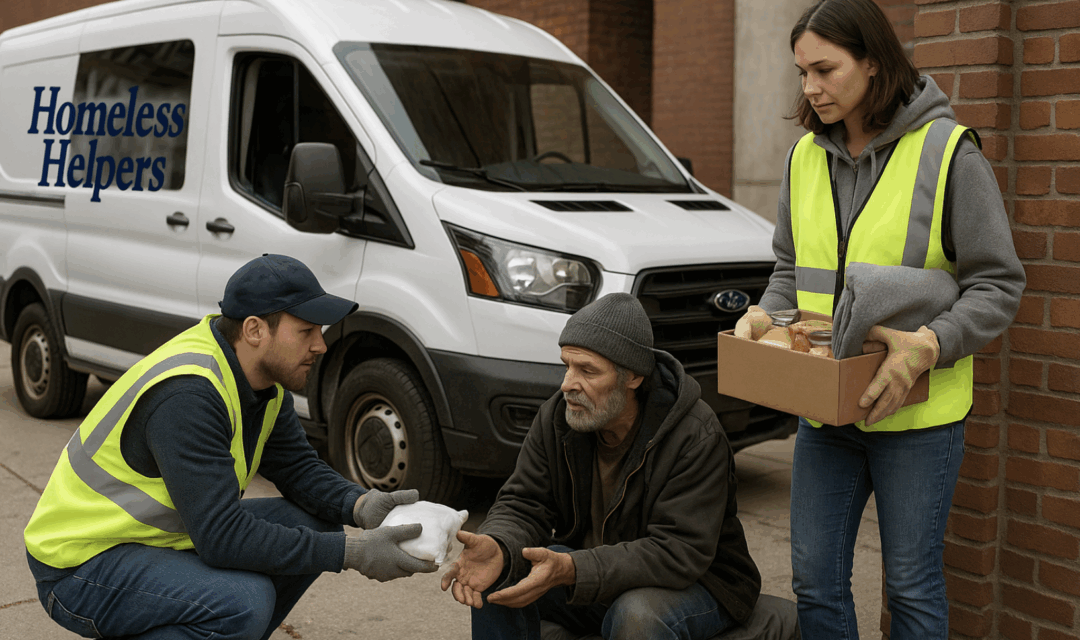
Chairman of the Guilford County Board of Commissioners Skip Alston is preparing to launch a new county initiative that would put county-operated vans on the road visiting homeless encampments, wooded areas and the scattered pockets of people living behind stores, hotels and industrial buildings from Greensboro to High Point.
The purpose is simple and direct: find homeless residents where they actually are, offer them transportation to shelters or treatment if they want it, and, if they don’t, at least give them blankets, food, and other basic supplies they need to stay alive on nights like the ones the county has experienced lately.
Alston hasn’t formally presented the plan to the Board of Commissioners yet; however, as everyone in Guilford County government knows, once Alston wants something, it usually happens.
He said he’ll be asking his colleagues for support for what he thinks is a great idea.
What’s interesting is that the idea didn’t come from a consultant, a task force or a policy paper. It came from a conversation Alston had with a homeless man during one of the county’s point-in-time counts.
Alston said the man told him he genuinely wanted to get off drugs but had no way to reach any of the existing treatment or shelter options.
“He said he’d go get services if he could,” Alston said, recounting the conversation. “But he said he couldn’t get downtown. He was living behind Sam’s Club and staying around that area. He said, ‘I don’t have transportation. I can’t get all the way down there, so I stay where I can. The same guys are around here. When they drink, I drink. When they use drugs, I use drugs. I can’t get out of this environment.’”
Alston said it hit him immediately: if the county wants people to get treatment or shelter, especially the ones who say they want help, it has to meet them where they are.
The homeless man laid the problem out well: without transportation, nothing else works. Walking miles to downtown shelters isn’t practical. It’s even less practical at night or in freezing weather. And many homeless residents with addictions simply can’t leave the environment that keeps them using unless someone physically takes them out of it.
“Damn, you’re right,” Alston told the homeless man.
That conversation is what sparked the van idea.
Alston said the people who would drive the vans would know the locations where homeless residents regularly stay. The county already knows most of them from repeated point-in-time counts: behind Sam’s Club, behind Walmart, along the wooded areas near hotels off Stanley Road and behind assorted commercial buildings.
Alston said that outreach teams already go to these places periodically, but a structured van-based system would make it consistent and systematic.
The plan is to have the vans out – especially on dangerously cold nights – offering rides to shelters as well as providing emergency items on the spot.
If a person doesn’t want to go to a shelter, they’d still get blankets, food and whatever basics might help them survive.
Alston said this isn’t about forcing anyone into treatment or pushing anyone into a shelter they don’t want to be in. It’s just about offering options that right now many homeless residents simply can’t reach.
“You don’t believe it’ll be below freezing,” Alston said, speaking of how cold nights create a life-and-death scramble. “You should have three or four vans going around.”
The vans won’t solve the larger issue of limited shelter capacity, but Alston said the county’s broader homelessness strategy is finally starting to take shape after years of agencies, municipalities and nonprofits all working in different directions. He said the county, Greensboro and High Point are more coordinated than ever, though still not where he wants them to be.
“We’re about sixty percent there,” he said. “We’re more on the same page now than we’ve ever been.”
Part of what gives the county confidence in moving ahead with the vans is that it’s the connective tissue to the current plans to address homelessness. Several major facilities are finally coming online after years of planning delays.
First among them is the long-term substance-abuse treatment center being opened in the old nursing home on Lees Chapel Road. The county is cutting the ribbon in January, and Alston said it will provide more than sixty beds for residents who need long-term recovery.
Daymark will staff and operate that building.
Once that center opens, the county will move employees out of another building, freeing it up to become the Women and Children’s Empowerment Center. That facility is projected to include about thirty beds and could be operating sometime next year.
Alston said having those beds finally available will relieve pressure on short-term shelters, create an actual place to take people who want treatment and make the van system far more effective.
“Once we get the long-term treatment center open,” the chairman said, “that will free up some of the spaces in these short-term stays.”
On top of those projects, Guilford County still works with city-run shelters and the IRC, and the van drivers would know in real time which ones have openings. The idea is that no one offering help should be guessing where a bed might be.
The county also still has some unspent ARPA money that can be used for certain homelessness initiatives, including facility upgrades and shelter needs. Alston said recent task force recommendations resulted in about $95,000 going to High Point shelters and their Housing Authority to address building needs.
Even with the progress Guilford County has seen, he said, the region isn’t completely aligned – and a task force can only recommend funding, not grant it.
Municipalities ultimately have to respond to the recommendations.
But Alston said cooperation is improving and the new facilities finally give the county the infrastructure it’s lacked for years.
He said transportation often gets overlooked when local governments talk about homelessness.
Alston added that it’s unreasonable to expect someone to walk miles from a wooded camp to a downtown building at night – especially if they’re dealing with addiction or mental-health issues, or if the weather can kill them.
“They can’t walk all the way downtown,” he said. “We can’t expect them to.”
Alston, who was just elected chairman of the board for a tenth time, plans to bring the proposal to the Board of Commissioners after the long-term treatment center opens.