


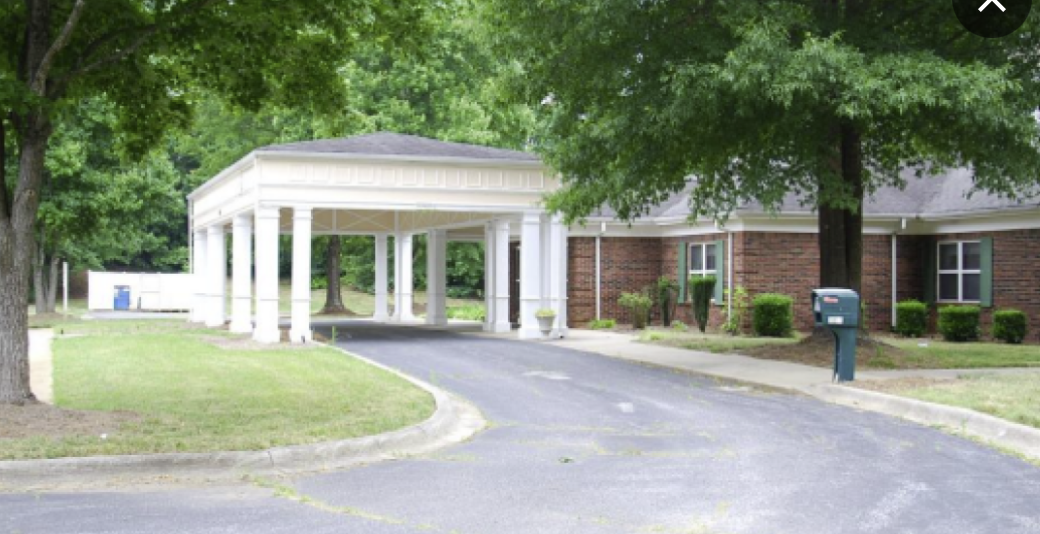
Guilford County officials will gather Thursday afternoon to officially cut the ribbon on a project that’s been years in the making – the Reverend Prince Edward Graves Recovery and Treatment Center at 1411 Lees Chapel Rd.
The ceremony is scheduled for Thursday, Feb. 12 at 4 p.m., with county leaders hosting a ribbon-cutting and open house at the newly renovated facility.
For those who’ve been following the saga of the old nursing home on Lees Chapel Road, this moment marks the culmination of a long and often bumpy road.
Back in the summer of 2023, the Board of Commissioners approved the purchase of the former nursing home building and the 3.8 acres it sits on for roughly $3.4 million.
At that time, Chairman of the Guilford County Board of Commissioners Skip Alston said the county desperately needed a long-term residential treatment facility for people battling addiction.
For more than two decades, commissioners had lamented the shortage of long-term beds for people struggling with substance abuse. While short-term detox options existed, county leaders and health officials repeatedly argued that meaningful recovery requires longer stays and more comprehensive services.
The purchase of the Lees Chapel property was billed as one of the most significant moves the county had made in that fight.
The building – once a nursing home – would be converted into what was initially called the Lees Chapel Residential Recovery Center.
The plan was to create a mid- to long-term residential facility that could serve county residents dealing with drug addiction – a problem that commissioners have frequently linked to homelessness and other social challenges.
In January 2024, the board took another major step, approving the renovation project needed to bring the building into compliance with state licensing standards. Because the commissioners wanted to move quickly, staff recommended using the Design-Build method, which allows a single contractor to handle both design and construction.
That approach required meeting specific state law criteria; however, county staff concluded it was the fastest and most efficient way to get the project operational.
In March 2024, the board selected Blum Construction – a company already working on other major county projects – to lead the upfit. Blum partnered with LS3P Architects under a Design-Build contract to produce construction plans, secure permits and establish a Guaranteed Maximum Price for the work.
At that point, county leaders were pressing hard to get the center open as soon as possible.
But, as often happens with older buildings, surprises emerged.
In 2025, during demolition and interior work, crews discovered mold in multiple resident rooms and inside the building’s HVAC system.
Construction had to be halted for more than two weeks while environmental testing was conducted and specialized crews removed and replaced contaminated drywall, insulation, woodwork and ductwork.
That discovery added $632,284 to the construction contract.
Mold remediation alone accounted for about $436,813 of that increase.
Other added costs included new requirements from the county’s Technical Review Committee, a change in generator supplier due to delivery issues and contractually permitted markups.
The total Guaranteed Maximum Price increased from $4.57 million to just over $5.2 million.
That delay also pushed back the timeline for completion by roughly three months.
Now, with construction finished and state licensing requirements met, the facility is ready to open its doors under a new name – the Reverend Prince Edward Graves Recovery and Treatment Center.
According to the county’s announcement this week, the center is part of Guilford County’s broader strategy to enhance local behavioral health services, including increasing access to mid- and long-term residential recovery options.
The facility is located at 1411 Lees Chapel Rd. in Greensboro. Limited parking will be available at the center itself during the event, with additional parking at Church Crossing Center at 1308 Lees Chapel Rd.
County officials have long argued that investment in residential recovery services is essential not only to address addiction but also to tackle related issues such as homelessness, emergency room overcrowding and the strain on the criminal justice system.
When the property was first approved for purchase in 2023, Alston said a long-term treatment center was something the county had needed badly for a long time.
Commissioners had repeatedly discussed the lack of sufficient long-term treatment beds and the revolving door that often results when individuals receive only short-term stabilization before being discharged.
Guilford County has used funds from the national opioid settlement to support its efforts to expand substance abuse treatment options.
Over the past several years, Guilford County has positioned behavioral health and homelessness as key priorities.
The Lees Chapel project has been one of the most visible bricks-and-mortar components of that strategy.
Transforming a former nursing home into a licensed residential treatment facility required extensive renovation to meet the standards of the North Carolina Division of Health Service Regulation: That included not only structural and interior modifications but also upgrades to systems such as HVAC and emergency power.
Despite the mold setback and added expense, commissioners opted to move forward, appropriating additional funds from the county’s Capital Building Construction Fund to keep the project on track.
Now, as county leaders gather for the ribbon cutting, they’ll be marking what they view as a major expansion of the county’s capacity to provide longer-term recovery services for residents battling addiction.
The open house following the ceremony will allow community members and media to tour the renovated space and see firsthand how the former nursing home has been repurposed.
For commissioners, who’ve been discussing the need for long-term recovery beds since the early 2000s, the event represents the realization of a goal that’s been talked about for years.




More whiz into the wind and typical wasted tax dollars from the guilford county commissioners.