

Guilford County tax officials are beginning a public education push ahead of the countywide 2026 property value reappraisal announcements – an event that’s drawn heightened attention after the sharp increases many homeowners saw during the last revaluation.
The Guilford County Tax Department publicized this week that it will hold a series of Tax Reappraisal Educational Meetings later in January to explain how the upcoming reappraisal will work and to let property owners know what to expect.
The meetings will be aimed at helping residents understand how property values are assessed, how to review updated values online once they’re released, how the appeal process will work, and what exemptions may be available, particularly when it comes to elderly residents and veterans.
Each meeting will begin at 6 p.m. with a presentation by county staff.
Following that presentation, staff members will be available to meet one-on-one with residents to discuss eligibility for tax exemptions.
County officials are emphasizing that the sessions are informational in nature. That is, property values and tax rate details won’t be available at the meetings. You’ll have to wait until February to learn those numbers.
The education sessions come after a year in which property taxes and assessed values remained a recurring issue across Guilford County. The Rhino Times has reported extensively on homeowner concerns following the last reappraisal, which produced significant increases in assessed values for many residential properties, particularly in neighborhoods that had seen rising market prices over the previous cycle.
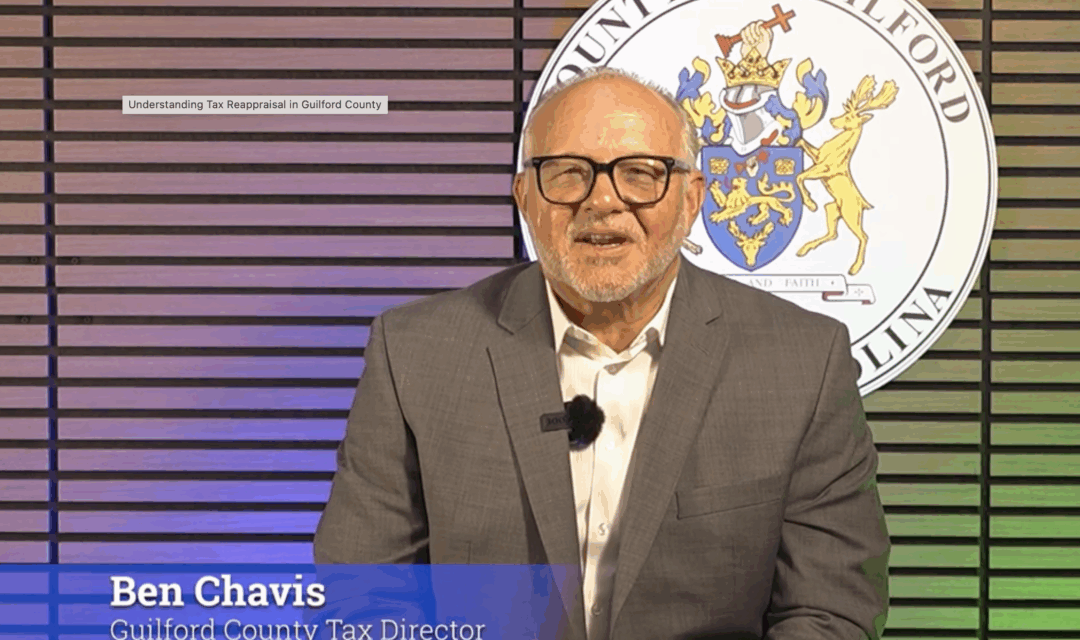
While county officials repeatedly stressed that higher assessed values don’t automatically translate into higher tax bills unless tax rates remain unchanged, that distinction has often been difficult to convey to residents opening reappraisal notices showing large jumps in value. One message Guilford County Tax Director Ben Chavis often delivers is that he’s not the bad guy. His department just values the property; it’s the county commissioners who decide whether the tax rate goes up, goes down or stays the same in light of the new values.
County officials have previously acknowledged that many property owners don’t fully understand how assessments are calculated or what evidence has to be shown to successfully appeal a valuation.
The upcoming meetings appear designed, at least in part, to address those gaps before notices are mailed.
Under North Carolina law, counties are required to periodically reappraise property to reflect current market values. Once notices are issued, property owners who believe their assessed value doesn’t reflect fair market value will have an opportunity to appeal. County tax officials have consistently advised residents to review their property record cards carefully, verify square footage and features, and compare assessed values to recent comparable sales.
The Tax Department has also encouraged eligible residents to explore available exemptions. Guilford County offers tax relief programs for qualifying elderly and disabled homeowners, as well as certain veterans. Guilford County staff at the upcoming meetings will be available to answer questions about those programs and explain eligibility requirements.
Three education sessions are scheduled in different parts of the county.
The first session will be held Tuesday, Jan. 20, at 6 p.m. at the Carl Chavis Memorial YMCA at 2757 Granville St. in High Point.
The second session will take place Thursday, Jan. 22, at 6 p.m. at the Bur-Mil Clubhouse in Bur-Mil Park at 5834 Bur-Mil Club Road in Greensboro.
The third is scheduled for Tuesday, Jan. 27, at 6 p.m. at the NC Cooperative Extension – Guilford County Center at 3309 Burlington Road in Greensboro.
County officials said the sessions will focus on process and preparation rather than outcomes. Specific property values and future tax rates won’t be discussed.
The Rhino Times coverage over the past year has shown that concerns over reappraisal aren’t limited to individual homeowners: Elected officials have faced pressure from residents who are worried about affordability – particularly seniors on fixed incomes. Commissioners have repeatedly said that, while they do not control market-driven property values, they do retain authority over the tax rate, which is set during the annual budget process.
That distinction is likely to remain central to the public conversation once reappraisal notices are mailed and budget discussions begin later in the year.
For now, county officials appear focused on education.
By explaining how assessments work, how appeals function and what relief programs exist, the Tax Department hopes residents will be better prepared when their notices arrive in the mail.
Additional information about Guilford County’s 2026 property value reappraisal is available at GuilfordCountyNC.gov/2026Reappraisal.




* * * *
They’re trying to tamp down the outrage before it erupts !
We’re going to have to protest loudly and publicly to stop this shake down.