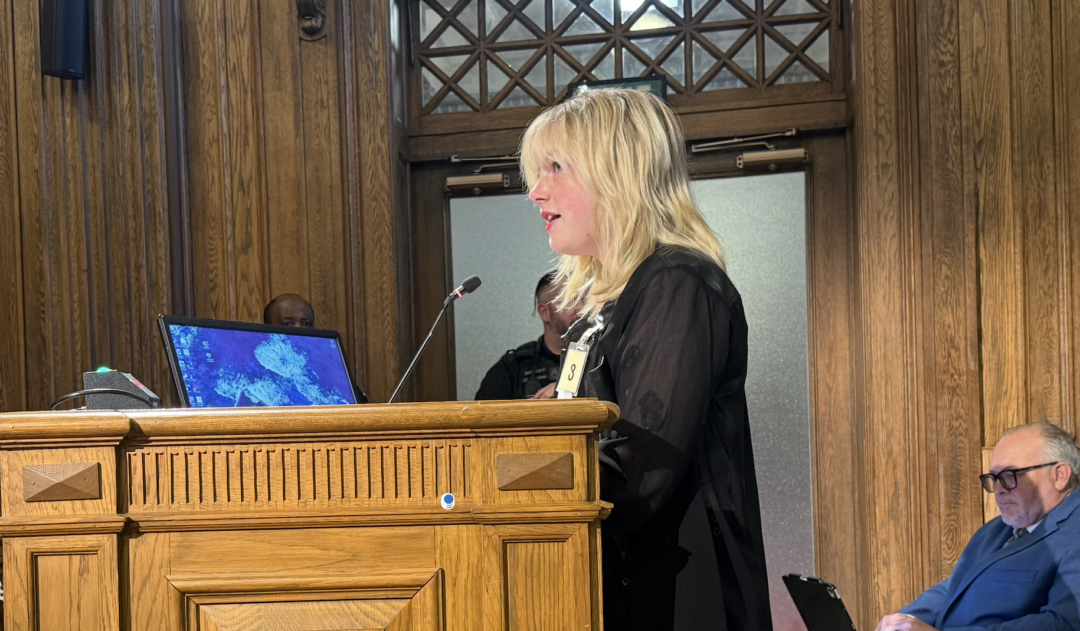
There was a large audience in the commissioners meeting room on the second floor of the Old Guilford County Court House at the board’s Thursday, April 2 meeting, and on this night it was raised voices and more than a few angry taxpayers that set the tone from the start.
Guilford County residents lined up to speak their minds from the floor about the 2026 countywide property revaluation – and what many fear will follow because of it: a major tax increase.
What became clear very early on was that this wasn’t going to be a routine public comment session. Instead, it was something closer to a pressure release valve.
If the Guilford County commissioners were to keep the current tax rate the same after the 2026 revaluation (they will not), the county would see an estimated $175 million increase in annual revenue. That’s not because the tax rate increased – but because property values across the county have skyrocketed and the commissioners would not have lowered the rate to adjust for those higher values.
One of the most uncomfortable moments came even before the meeting started, when a resident confronted Ben Chavis, the county’s tax director, about the accuracy of the appraisals.
The resident, Mike Perdue, questioned the number of appraisers on staff and, when Chavis answered “25,” Perdue shot back with something along the lines of “Twenty-five people who don’t know what they are doing.”
Perdue blasted the Tax Department’s work and suggested that the valuations were wildly off base. He later took those concerns to the podium, where he continued his criticism of both the process and the results.
Chavis, an ordained minister who also gives the prayer before each commissioners meeting, kept his cool and turned the other cheek, but it was obvious he didn’t appreciate the abrasive verbal assault.
However, Perdue’s frustration echoed throughout the room.
Here are some of the things people need to understand at this point:
(1) As of now, the Board of Commissioners hasn’t raised taxes a dime.
(2) Guilford County Tax Department Director Ben Chavis and his staff are not the bad guys here. All they did was analyze every property in the county to the best of their ability, look at comparable housing sales and many other factors, and try to come up with a value that reflects what the property would sell for in today’s market.
Chavis has absolutely no say in whether the county commissioners take all $175 million extra, reduce the tax rate to a revenue-neutral level – essentially keeping most tax bills about the same – or do something in between.
Also – and this is very important – if you feel your valuation is way out of line, you can appeal to the Tax Department. At first, that’s informal. If there’s no satisfaction there, you can get a hearing with the Board of Equalization and Review and, if still not satisfied, you can take your case to the state.
This week Chairman of the Board of Commissioners Skip Alston told the Rhino Times the following about the tax rate situation this year: “It won’t be revenue neutral, but we are not going to take the whole $175 million either.”
Alston added that the board was working hard to keep tax bills as low as possible and he said the commissioners had been hearing the pleas of taxpayers loud and clear.
“I think people will be very appreciative of the hard work we are putting in to help keep the rate as low as possible,” the chairman said.
Alston added that Guilford County government does have a lot of obligations, including paying back school bond debt, but said the board is doing all it can, along with staff, to make the situation as easy as possible on county taxpayers.
Many speakers at the April 2 meeting said their property values had doubled – or more – despite no meaningful improvements. Others pointed to inconsistencies, with similar homes on the same street seeing vastly different increases. Several speakers argued that the numbers didn’t reflect reality at all.
One speaker described a commercial property jumping from roughly $290,000 to over $1.5 million. Another said a damaged swimming pool – long ago buried and unusable – somehow added tens of thousands of dollars to her home’s value in 2026.
The perception of unfairness was widespread.
Speaker after speaker warned that even a partial increase could have serious consequences.
One 24-year-old speaking on behalf of her parents, Tacoma Boan, said their home had been revalued from about $500,000 to nearly $1 million. She tied the issue directly to broader economic pressures, including inflation, housing affordability and stagnant wages.
She said people her age are already struggling to afford housing and warned that higher property taxes would only push homeownership further out of reach.
“If young people can’t afford to buy,” she said, “they rent – and when property taxes go up, rents go up too.”
Several speakers, in fact, argued that rising property taxes would inevitably be passed on to renters, worsening an already tight housing market.
Others said seniors on fixed incomes could be forced out of homes they’ve lived in for decades.
One resident said that he’s already hearing from people who may have to sell family homes or consider reverse mortgages just to stay afloat.
Another warned that businesses – especially small ones – may not survive.
A local business owner said his rent is likely to rise sharply because of the increased valuation of the property he occupies. At the same time, he said, customer demand isn’t exactly booming.
That’s a tough combination.
“If businesses can’t afford to operate,” he told the board, “they’ll close – and that hurts everybody.”
Others took a broader view, questioning the county’s overall approach to spending.
One speaker noted that Guilford County’s tax rate is higher than counties like Mecklenburg and Wake and asked why local leaders aren’t focusing more on reducing costs instead of increasing revenue.
Another criticized what he described as a lack of serious discussion about lowering taxes at all.
“Have you ever had a meeting,” he asked, “where the goal was to reduce taxes?”
Some speakers went further, accusing the county of overreach and poor priorities. A few suggested that government spending – not taxpayer revenue – is the real problem.
One woman described how homes in her neighborhood – built around the same time and with similar features – received wildly different valuations. She said she couldn’t understand how that could happen and urged the commissioners to take a closer look.
Another longtime resident, whose family has lived on the same land for generations, said rising values driven by nearby development don’t reflect the condition of his property – but they will affect what he has to pay.
He also questioned whether taxpayers are seeing the benefits of the money already being collected, pointing to maintenance issues at local schools.
And, while most speakers focused on taxes and revaluation, a few tied the issue to larger concerns.
One speaker working in outreach and public health warned that rising housing costs are contributing to homelessness and instability, particularly among seniors and working families. She described what she called a growing public health crisis tied to housing affordability.
That perspective underscored the broader stakes. This isn’t just about numbers on a tax bill. It’s about whether people can afford to stay where they are.
At the end of the meeting, Alston emphasized that no final decisions have been made and that the process is ongoing. He encouraged residents to stay engaged, attend future meetings and ask questions as the board works through its budget decisions in the coming months.
“This is your money,” he said.
He also told those in attendance and watching on TV to check the county’s website for upcoming town halls in their districts so they can hear directly from commissioners and offer feedback.