

You’ll probably want to be sitting down in a few weeks when you open your notice from the county regarding how much the Guilford County Tax Department believes your house or other property is worth.
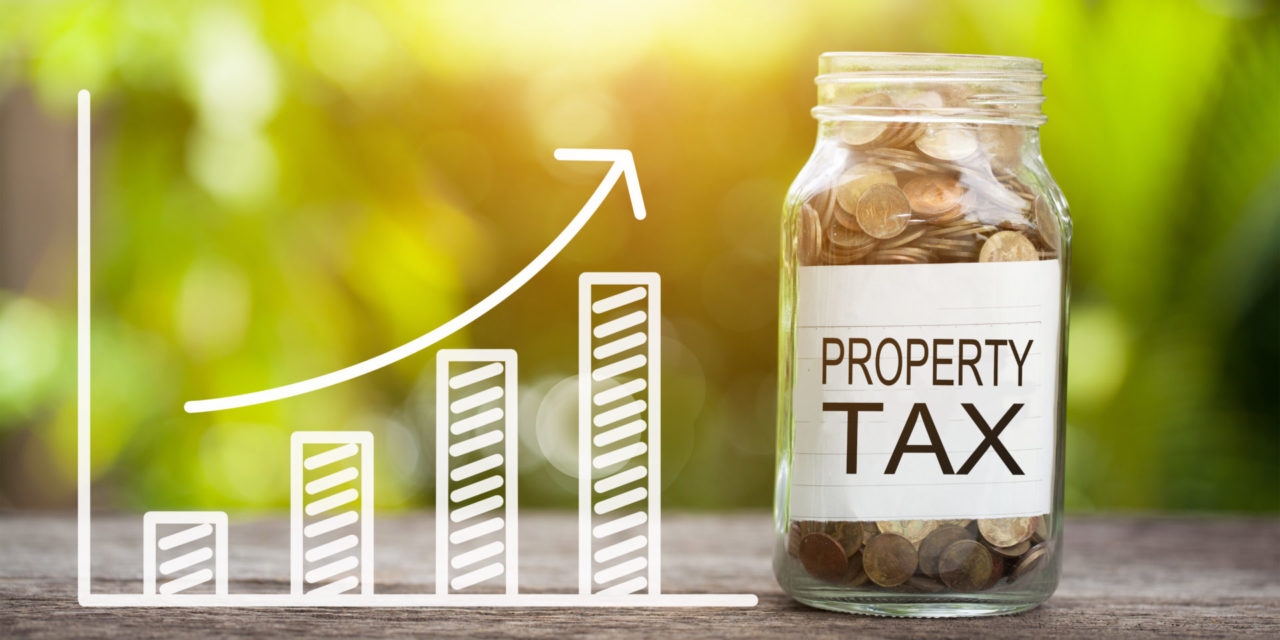
According to preliminary numbers, which are said to have held up to the end of the year, on average, property values in the county were up about 48 percent – and housing was a segment said by tax officials to be coming in even higher than that.
Which is why you may want to be sitting down when you open the notice.
Unless the Guilford County Board of Commissioners reduces the tax rate when the board adopts a 2026-2027 fiscal budget in June, the average property tax bill will go up about 48 percent or more.
The late Commissioner Carolyn Coleman used to argue with the tax director because she believed the department consistently undervalued her house and those in her neighborhood. She didn’t seem to realize that we should all be so lucky because, while you want a great price when you sell your house, you don’t want your house or other property sitting on the tax rolls year after year with a high value.
Republican Guilford County Commissioner Pat Tillman told the Rhino Times last year that it should be almost unthinkable for the board to leave the property tax rate where it is given the coming increase in value; however, the Board of Commissioners is made up of two Republicans and seven Democrats and the leader of the Democrats, Chairman of the Guilford County Board of Commissioners Skip Alston, has said leaving the county tax rate the same is a distinct possibility. He has said that the board will have to see how the numbers add up closer to budget time, and he continuously points out that Guilford County has a giant number of needs on top of the $2 billion in school debt that voters have approved in recent years.
With interest, that total bill comes in well over $3 billion.
Property owners across Guilford County will begin receiving their notices in February 2026 informing them of their new assessed property values under the county’s 2026 real property reappraisal.
The reappraisal, conducted by county Tax Department appraisers certified by the North Carolina Department of Revenue and the North Carolina Appraisal Board, took effect January 1, 2026 – with results that will be reflected on property tax bills mailed out in early- to mid-July 2026.
County tax staff always emphasize that the reappraisal affects only assessed values – not tax rates. The all-important tax rate will be set separately by the Guilford County Board of Commissioners in June of 2026 as part of the county’s budget process.
According to an online informational brochure, the Tax Department uses a detailed set of tools and techniques to establish market value countywide. Those tools include county maps, aerial photography, street-level images, sales reviews and field visits, along with analysis of recent sales in each neighborhood.
Most of the secret sauce is not secret; however, some parts of the process aren’t shared publicly because those are made up of corporate proprietary information.
The goal of the process, according to Tax Director Ben Chavis, is to determine the most probable sale price for a property under current market conditions.
The brochure stresses that reappraisal isn’t optional: State law requires counties to periodically revalue property to ensure equity and uniformity across taxpayers.
Guilford County conducts the reappraisal in-house using local staff familiar with neighborhood-specific market trends.
Once assessment notices are mailed in February, property owners who accept the assessed value won’t need to take any action.
On the other hand, property owners who believe their valuation is incorrect can file an informal appeal within 30 days of the notice.
Informal appeals can be submitted online, by email or by mail.
If the issue isn’t resolved through the informal appeal process, property owners can pursue a formal appeal before the Board of Equalization and Review.
The Tax Department also notes that changes in assessed value will vary by neighborhood and property type.
Depending on recent comparable sales and market data, a property’s value may increase, decrease or remain relatively unchanged. But clearly most property in Guilford County will be valued higher than before.
The reappraisal applies to real property only and doesn’t include vehicles or other personal property, which are assessed annually.
County officials are urging property owners to carefully review their assessment notices when they arrive in order to understand both the valuation process and available appeal options. Owners will be informed what steps to take if they believe the assessed value doesn’t reflect what the actual sale value of the house would be.




When will people realize the County Board of Commissars DON’T CARE!
Time for a Guilford County Tea Party.
This is theft. How this can be justified? This is making Guilford County even more unaffordable. Looks like this is the warmth of collectivism. Who or what are we paying for now ???
Just remember when you go to the poles who to vote for next time
A person in Greensboro with a $300,000 house value paying $4200/year in property taxes could see their home go to a $450,000 value and pay $6300/year in property taxes, an amount increase of $2100/year.
Democrats are sticking it to the tax payers of Guilford County. Renters will pay more as well as property taxes are passed through. The only way to avoid this is to vote for Republicans. In 2026, help elect Pat Tillman in District 3, Alan Perdue in District 2, Tony Jacobelli At Large Commissioners. Volunteer to help hang doors, put signs out, poll greet, poll observe, make phone calls, attend monthly Republican meetings. You can complain or you can help Republicans get elected. Tell young people and those not registered to register and vote conservative. Democrats believe in bigger government and higher taxes. They are moving more and more to socialist collectivism vs individual responsibility as seen by Mamdani. In NC, Republicans just passed Democrats in registered voters for the first time in state history. Democrats at one time had over 70% of registered voters in NC and now they are 30%. Democrats are leaving their party in NC. Vote Republican!!
the ‘unaffiliated’ outnumber both parties in NC which means they both stink & we have minority rule as we have ALWAYS had ! consider all the issues we & our ‘representatives’ never get to vote on ? now add graft, gerrymandering & the power of $$ & the media
Not enough people bother to show up to vote, some 18% at last election.
my club, Polar Bares, is going to the antarctic, it’s summer there! see u there sans clothing !
Absolutely! Everyone with common sense needs to vote out these thieves!
This is really stupid. The tax budget must be based on past dollars spent on expenses and any increase or decrease should be directly related to an increase or decrease in related expenses. THE TAX BILL HAS ABSOLUTELY NOTHING TO DO WITH THE APPRAISED VALUE. I hope the taxpayers are not so stupid as to believe they are related. TAX BILLS SHOULD STAY THE SAME UNLESS EXPENSES GO UP.
Skip clearly sees it the other way around with ‘how much money can I spend’. He is awful for Guilford County. Glad I left after the last spike in taxes.
Yes it’s time for Alan Perdue to be voted out. He is part of problem
If Perdue is a RINO, kick him to the curb as quickly as possible.
Alan Perdue is not the problem. He votes against tax increases. He is a Republican. His opponent is a Democrat who we know votes for tax increases.
In 2022, the last time reappraisals were done, my home value increased 30%. Now they want to go up an estimated 50%. These no way I could sell my property for that much. And here’s another item, when property taxes rise what is the affect on inflation? Businesses will have to increase the selling price of their goods and services to cover the increase in the tax bill that they have to recover. What a vicious circle. Obviously, that means our local government have a direct impact on inflation, but nobody seems to care since the citizens of Guilford County keep electing the same people who have deaf ears when it comes to matters like taxes.
I’m a senior on a fixed income and have been dreading the new property tax coming soon. What are seniors supposed to do if we can’t afford the increase? I guess we’ll be moving in with Skippy.
More money for Emperor Skippy!!! And we bear the cost.
Alan, you are RIGHT. WE NEED A GUILFORD COUNTY TEA PARTY…AND NOW!
Republican Speaker of the House Destin Hall created a House Select Committee on Property Tax Reduction and Reform. This Select Committee had an informational meeting in December so Committee members could learn about NC property tax laws, an Assessment Freeze and how other states handle property tax. The Select Committee is meeting on Wednesday January 14th at 10 am, Room 643 at the Legislative Office Building (LOB), 16 West Jones Street, Raleigh. The building opens to the public at 8 am and anyone who wants to speak DIRECTLY to the Select Committee must register to speak. They are expecting a big crowd so if you want to speak, arrive early and sign in. Each speaker may be able to speak to the Committee for about2 minutes. You can also send an email to the Committee Assistant, Holden Williams. (holden.williams@ncleg.gov) and he will distribute copies of your email to all Committee members but not to every member of the legislature. You may also want to send your comments DIRECTLY to EVERY member of the House and Senate. You can also call them. I am told that the more calls and emails, the more likely the legislators will respond.
You can find the phone number, street address and email address of every Senator and Representative by going to ncleg.gov. You can also see, and print, the presentation material the legislative staff shared at the December meeting by using the ncleg.gov website and searching for the House Select Committee on Tax Reduction and Reform.
I urge you to ATTEND and show just how important this issue is for YOU and YOUR FAMILY.. If you can’t attend, be sure YOU send an email, letter or call YOUR legislator even if they are not on the committee. BE SURE TO TELL YOUR FAMILY MEMBERS, FRIENDS AND CO-WORKERS.
In our HOA community, since 2017, our taxes will go up by 102% if Guilford is not stopped. Forsyth County and Winston Salem saw 50% and 58% increases. YOU CAN HELP STOP THIS FROM HAPPENING IN GUILFORD. If ANY legislator doesn’t want to reduce taxes and prevent this type of increase from happening, it is time to VOTE THEM OUT and replace them with someone who will truly speak for you and be your advocate.
The proposal I have already made to several Committee members is that the dollar amount of taxes can got up by 3% each year OR the previous years’ Social Security Cost of Living Allowance (COLA), WHICHEVER IS LESS. If any government wants more money, they SHALL BE REQUIRED to submit a referendum for voter approval. It is important to say SHALL BE REQUIRED instead of ‘Should be required’ because ‘Should be’ gives local politicians an out by saying they are not required to offer a referendum. The word ‘SHALL’ means a referendum MUST be offered for approval by voters. Governments can’t weasel out of the requirement. This is a small word change but a HUGE difference in meaning.
COME TO THE MEETING AND VOICE YOUR OPINION. IF YOU DON’T, YOU, YOUR FAMILY AND ALL OF YOUR FRIENDS CO-WORKERS AND NEIGHBORS WILL HAVE TO LIVE WITH THE CONSEQUENCES.
Thank you for the recognition KEN.
What I meant was was we need is a Guilford County Tea Party similar to the original Boston Tea Party.
I’m also considering investing in a large quantity of tar, feathers and rails. What We the People need is to make it known in no uncertain terms that these “elected representatives” need to go. Unfortunately Skip the Omnipotent and his gaggle of gutless sycophants (which includes Republicans) have gone too far and all we can do is grab our ankles and scream “thank you sir, may I have another.”
Am lucky enough to be out of the County. I know the people who purchased my house in Greensboro. They are really upset about all this.
DO NOT MOVE TO GUILFORD COUNTY! If you are here, try to get out.
where do u work, shop, recreate, medical, consult . . . we should put tolls on roads into county ? live large out in the sticks & drop your $$ on us often / willingly . . . so we can pay our > property taxes
Who will help the senior citizens place in the streets ? This is what can happen when pay checks and social security barely increase. You need to think about this first. Remember we help build this city and county. Where is the loyalty? Do you not CARE?
Who is really shocked by this? The voters VOTED in the Liberals who love to spend money wastefully, and we will be paying for the incentive packages to Boom Industries and Toyota for the next 10 years, when they will move out of the area. Aren`t you proud of yourselves for exercising your vote the way you have?! Oh, and let us not forget the liberals desire for pay raises for doing nothing, the expensive retreats at which they drink alcohol and sunbathe, and the many wasteful ways Skip Alston has spent our money. Remember this and the lack of services in both the city and county in 4 years when next you have the opportunity to vote.
u have inspired me to run for political office !
You can talk all you want about a tea party, getting out the vote. Nothing is going to change. GSO and the county are blue. Even moderate democrats still vote for the same democrats who spend too much. Taxes will increase. You can’t stop it. The only real solution is to move to Rockingham, Alamance or Randolph counties.
.
Raleigh should require that every county appraisal of private homes becomes a legal offer to purchase.
So if your house is worth about $300,000 and they say it’s worth $325,000, you have the right to accept their valuation by selling it to them – FOR $325,000, which is what they claim it’s worth.
Suddenly the bureaucrats in local government would be a lot more conservative in their appraisals.
This would fix the problem.
It ain’t the appraisal. The house is worth what it is worth on the market, and there is no denying that property values are up. It’s all about what sort of tax rate Darth Alston ultimately sets.